
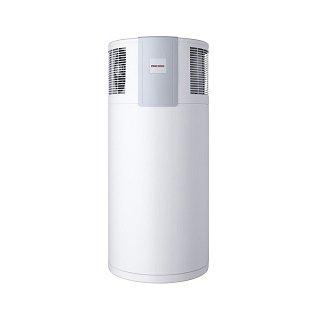


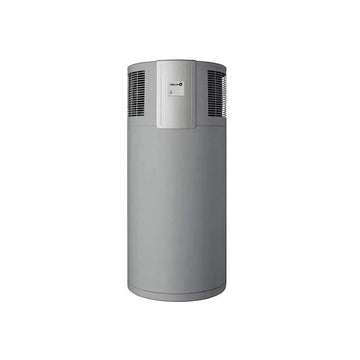
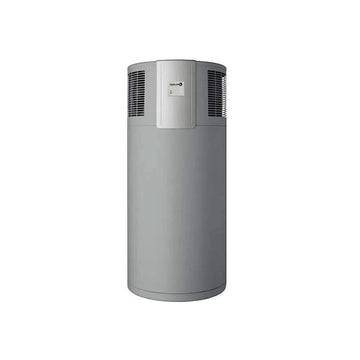


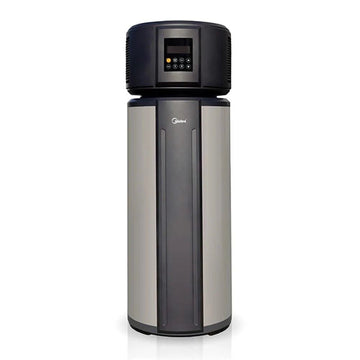
Midea R290 235L
Model RSJ-V28/235RDN7-L2 combines 235L storage with approximately 2.8kW heat-pump heating capacity and a published COP of approximately 4.8 under the manufacturer's stated test conditions.
From

Compare electric, gas, heat pump and solar hot water systems with upfront online pricing. Use our guide to narrow the right system or browse the full installed range.
We’ll work out where you should go next. Sizing and model selection come after.
Drag to compare how your hot water system choice can change what you pay to run it over 10 years.
Real stories from hot water system homeowners who’ve experienced fast installs, expert advice, and 5-star service with JR Gas & Water.
Book an onsite inspection and one of our plumbers can inspect your existing hot water system, review the installation requirements and talk you through suitable replacement options before you choose. We can compare electric storage, heat pump, gas and solar hot water options based on your home and existing setup.
Ideal if you would prefer a plumber to inspect the existing system and discuss your hot water replacement options onsite before choosing.
Spread the cost of your new hot water system with flexible payment options on eligible purchases. Pay securely with Zip, Afterpay, PayPal, Google Pay, Visa or Mastercard .


Midea is one of the world's largest appliance manufacturers and produces all-in-one heat pump water heaters for Australian homes. The current Australian Midea range has moved to modern R290 technology in 235L and 280L capacities, while many existing Australian installations use the earlier Chromagen-distributed Midea HP170 and HP280 R134a platforms.
JR Gas & Water installs and replaces suitable Midea heat pump hot water systems throughout Brisbane, the Gold Coast and eligible South East Queensland service areas.
The main thing to understand when comparing Midea is the generation. Current R290 products have significantly different controls, electrical requirements and performance specifications from the older Chromagen Midea HP170 and HP280.
The pricing below is pulled only from genuine available Midea or Chromagen-Midea heat pumps in JR Gas & Water's live collection.
Unrelated Envirosun and Enviroheat products, servicing and unavailable variants are excluded.
The lowest-priced currently available genuine Midea system is the from .
Final installed cost depends on the exact model, plumbing, electrical supply, condensate drainage, base, relocation and other site requirements.
| Midea model | Current JR starting price | Generation |
|---|---|---|
| Chromagen Midea HP170 | Earlier 170L R134a platform | |
| Chromagen Midea HP280 | Earlier 280L R134a platform | |
| Midea R290 235L | Current R290 platform | |
| Midea R290 280L | Current R290 platform |
Midea's current Australian HVAC & Energy hot-water range uses two all-in-one R290 platforms: 235L and 280L.
Both use single-phase electricity, Wi-Fi-enabled controls, automatic and manual disinfection, built-in frost protection, solar-PV-compatible scheduling and a wide operating-temperature range.
Model RSJ-V28/235RDN7-L2 combines 235L storage with approximately 2.8kW heat-pump heating capacity and a published COP of approximately 4.8 under the manufacturer's stated test conditions.
FromModel RSJ-23/300RDN7-L2 provides 280L storage with approximately 2.5kW heat-pump heating capacity and a published COP around 4.6 under the stated test conditions.
From| Specification | Midea 235L | Midea 280L |
|---|---|---|
| Model | RSJ-V28/235RDN7-L2 | RSJ-23/300RDN7-L2 |
| Storage | 235L | 280L |
| Refrigerant | R290 | R290 |
| Heat-pump capacity | Approx. 2.8kW | Approx. 2.5kW |
| Published COP | Approx. 4.8 | Approx. 4.6 |
| Sound pressure | Approx. 45dB(A) | Approx. 48dB(A) |
| Maximum current | Approx. 9A | Approx. 9A |
| Power supply | 220–240V single phase | 220–240V single phase |
| Diameter | Approx. 650mm | Approx. 650mm |
| Height | Approx. 1730mm | Approx. 1962mm |
| Wi-Fi | Yes | Yes |
Before the current R290 generation, Midea heat pumps were widely distributed in Australia through Chromagen.
The best-known models are the 170L HP170 and 280L HP280. These are genuine Midea-built heat pumps, but their specifications should not be confused with the current Midea Australia R290 products.
The HP170 uses R134a refrigerant, approximately 170L storage, around 1.5kW heat-pump heating capacity and a 2.15kW electric booster.
FromThe older HP280 uses 280L storage, R134a refrigerant, approximately 2.0kW heat-pump output and a substantial 3.0kW electric booster element.
From| Feature | Current Midea R290 | Older Chromagen Midea |
|---|---|---|
| Main capacities | 235L / 280L | 170L / 280L |
| Refrigerant | R290 | R134a |
| Wi-Fi | Yes | Not a standard feature |
| Solar-PV compatibility | Promoted by current Midea platform | Basic timer/control platform |
| Current 280L published COP | Approx. 4.6 | Older platform commonly around mid-3 range |
| Current 280L max current | Approx. 9A | Approx. 17.3A |
| Current 280L electric booster | Current-generation configuration | 3.0kW on older HP280 |
A Midea heat pump water heater draws heat from the surrounding air using a refrigeration circuit and transfers that heat into the stored water.
Because most of the useful heat is moved rather than generated directly by an electric-resistance element, a heat pump can use significantly less electricity than conventional electric storage under suitable conditions.
An electric element is still available on all-in-one systems for backup, disinfection or higher-demand operating conditions.
Midea's current Australian all-in-one hot-water platform uses R290 refrigerant.
R290 is propane used as a natural refrigerant and has very low global-warming potential compared with older synthetic refrigerants such as R134a.
The shift to R290 also accompanies a major redesign of the Australian Midea platform, including lower electrical demand, Wi-Fi, broader controls and stronger published COP performance.
Current Midea Australia data lists a published COP of approximately 4.8 for the 235L model and 4.6 for the 280L model under the manufacturer's stated conditions.
COP measures how much useful heat is delivered relative to electrical energy consumed by the heat pump.
Actual household performance varies with ambient air temperature, incoming water temperature, storage temperature, hot-water usage and electric-element operation.
Current Midea Australia data lists approximately 45dB(A) sound pressure for the 235L and around 48dB(A) for the 280L.
Older Chromagen Midea specifications list approximately 48dB for HP170 and 49dB for HP280.
Actual perceived noise also depends on fences, walls, narrow side passages and distance from bedrooms and neighbouring properties.
Current Midea R290 specifications list heat-pump-only operation from approximately -7°C to 43°C.
With the electric heater available, the broader system operating range extends to approximately -20°C to 45°C.
Current products also include built-in frost protection.
Brisbane and Gold Coast conditions are normally comfortably within the heat-pump operating range.
Current Australian R290 product data lists a default storage setting around 60°C with an adjustable range of approximately 55°C to 70°C.
Delivered temperature at showers and personal-hygiene outlets is separately controlled by the plumbing system and Australian tempering requirements.
Current-generation Midea R290 water heaters are Wi-Fi enabled.
The smart-control platform allows operating settings and scheduling to be managed more easily than on the older Chromagen-distributed HP170 and HP280.
Current units also provide error-code display, power-outage memory and automatic/manual disinfection functions.
Current Midea heat pumps are designed to integrate well with homes using rooftop solar PV.
By scheduling water heating during daytime solar production, the heat pump can use more of the home's own electricity rather than exporting it to the grid.
The hot-water cylinder then stores the captured energy as heat for showers and household use later in the day.
JR sizes stored hot water around actual household demand rather than simply matching the old cylinder litre-for-litre.
Our starting allowances are approximately 40 litres per person per day for light use, 50 litres for average use, 65 litres for high use and around 80 litres for very heavy demand.
Strong current option for lower to moderate family demand where a compact tank, 2.8kW heat-pump capacity and lower cabinet height are advantageous.
Better suited where the household has higher peak demand, more occupants, longer showers or multiple bathrooms operating close together.
The Chromagen Midea HP170 remains installed in many Australian homes, and Chromagen still maintains service documentation and spare-parts references for the platform.
If the tank is sound and the fault is limited to an economical replaceable component, repair can still make sense.
Where the cylinder, compressor or several major components require work, comparing the newer Midea 235L or another current heat pump can provide a stronger long-term pathway.
These are different generations despite both being described as 280L Midea heat pumps.
The older Chromagen HP280 uses R134a, approximately 2.0kW heat-pump output and a 3.0kW electric element, with maximum electrical demand around 17.3A.
The newer Australian Midea 280L uses R290, approximately 2.5kW heat-pump capacity, Wi-Fi and a listed maximum current around 9A.
That makes the full model number essential when quoting electrical work, servicing or a like-for-like replacement.
Heat-pump faults can involve the refrigeration circuit, sensors, fan, controller, electric element, thermostat, electrical supply or plumbing components.
Older Chromagen Midea HP170 and HP280 systems also have multiple hardware revisions, so the model and manufacturing version should be identified before ordering parts.
Chromagen continues to list service documentation and spare parts for these older Midea platforms.
Conventional electric storage is one of the most logical systems to replace with a Midea heat pump.
The household retains a hot-water storage tank but changes the primary heating method from direct electric resistance to an air-source heat pump.
This can substantially reduce electricity consumption where the system is correctly sized and the heat pump performs most of the heating work.
Eligible approved Midea heat-pump installations can generate Small-scale Technology Certificates where the exact model and installation satisfy current scheme requirements.
Midea's current Australian platform is also promoted as eligible for applicable energy-upgrade programs, although eligibility varies by state, model and installation.
The certificate value should always be confirmed against the exact product being installed rather than relying on another Midea generation.
Midea Group is a major global appliance and HVAC manufacturer with products sold across domestic appliances, air conditioning, refrigeration and heat-pump technology.
In Australia, Midea hot-water systems have appeared through both distributor-led channels such as Chromagen and Midea's current direct HVAC & Energy product range.
This explains why Australian homes can contain substantially different Midea water-heater generations under the same brand name.
JR Gas & Water installs suitable Midea heat pump hot water systems throughout Brisbane, the Gold Coast and eligible South East Queensland service areas.
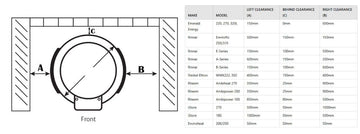
Installation needs to consider airflow, condensate drainage, electrical supply, tank base, plumbing, valves, clearances and access for future servicing.
Electrical requirements are particularly important when replacing an older Chromagen Midea HP280 because its maximum electrical demand is materially different from the newer Midea R290 platform.
Current available genuine Midea systems at JR Gas & Water range from to .
Midea's current Australian HVAC & Energy range lists 235L and 280L all-in-one R290 heat pump water heaters.
Chromagen distributed Midea-manufactured heat pump water heaters in Australia, including the HP170 and HP280. They are genuine Midea products, but they belong to an older Australian generation than Midea's current R290 range.
The current available Chromagen Midea HP280 at JR Gas & Water starts from .
The current RSJ-V28/235RDN7-L2 uses R290 refrigerant.
The current RSJ-23/300RDN7-L2 uses R290 refrigerant.
The older Chromagen Midea HP170 uses R134a refrigerant.
The established Chromagen Midea HP280 uses R134a refrigerant. It should not be confused with the newer R290 280L platform.
Midea Australia currently publishes a COP of approximately 4.8 under its stated test conditions.
Midea Australia currently publishes a COP of approximately 4.6 under the stated test conditions.
Current manufacturer specifications list approximately 45dB(A) sound pressure.
The current R290 280L is listed at approximately 48dB(A), while older Chromagen Midea HP280 specifications are around 49dB(A).
Yes. Midea's current Australian R290 all-in-one heat pumps are Wi-Fi-enabled.
Wi-Fi is not a standard feature of the older Chromagen-distributed HP170 and HP280 platforms.
Yes. Midea specifically promotes its current Australian R290 heat pumps as solar-PV compatible, allowing hot-water operation to be scheduled around daytime generation.
No. Both current Australian Midea R290 models use 220–240V single-phase electricity.
Current manufacturer data lists maximum current around 9A for the newer R290 280L model.
Older Chromagen Midea HP280 documentation lists maximum rated input around 4000W and 17.3A because of its larger electric booster.
Current R290 product information lists a default storage temperature around 60°C with an adjustable range of approximately 55°C to 70°C.
Current Midea R290 specifications list heat-pump operation down to approximately -7°C, with a wider system operating range when electric heating is available.
Potentially. Chromagen still publishes documentation and spare-parts references for older Midea HP170 systems. Repair viability depends on the failed component, tank condition and cost.
Potentially. Chromagen still maintains service and spare-parts documentation for HP280 generations, but major tank or refrigeration faults should be weighed against replacement with a newer system.
It can be a logical upgrade, but the replacement should be sized from current household demand rather than simply moving from 170L to the next available Midea size.
No. They share the same nominal storage size but use different refrigerants, electrical requirements, controls and performance specifications.
Yes. Replacing conventional electric storage is one of the main applications for a heat pump such as Midea.
Eligible approved Midea heat pumps can qualify for Small-scale Technology Certificates where the exact model and installation meet current scheme requirements.
See JR's Hot Water Rebates Queensland page for current information.
Yes. JR Gas & Water installs suitable Midea heat pump hot water systems throughout its Brisbane service area.
Yes. Suitable Midea heat pumps can be installed throughout JR Gas & Water's Gold Coast service area.
Yes. If you are unsure about capacity, generation, electrical requirements or whether Midea is the best replacement, you can request an onsite or written quote before choosing the final system.
For a new Midea installation, compare the current 235L and 280L R290 platforms around household demand, cabinet height and recovery. If you already own a Chromagen Midea HP170 or HP280, identify the exact model and generation first because its refrigerant, controls and electrical requirements are very different from the current Midea range.
Compare your current hot water system running costs against an efficient heat pump setup and see how much your household could save over 10 years.


