Reverse Osmosis Water Filters From $1,049 Installed
Compare residential, continuous-flow and specialist reverse osmosis systems by purified-water demand, tank or tankless configuration, cupboard space, outlet setup, verification and installed price.
Find the Right Reverse Osmosis System
All four systems remain available while the finder reorders them around your application, demand, configuration, water source, outlet, space, verification preference and budget.
Drag to compare the same four RO systems by installed price and performance. A required continuous-flow or food-service setup stays protected. JR Recommended stays fixed in the middle.
Why homeowners choose JR Gas & Water
Real stories from filtration system homeowners who’ve experienced fast installs, expert advice, and 5-star service with JR Gas & Water.
Prefer to discuss your water filtration options onsite?
Book an onsite inspection and one of our plumbers can inspect your existing plumbing, discuss what you want to improve in your water and help you choose the right drinking water, whole-home filtration or water treatment system for your property.
Ideal if you would prefer a plumber to inspect your property and discuss drinking water, whole-home filtration and water treatment options before choosing a system.
Flexible payment options
Water filtration from 4 easy payments of $124.75 on eligible purchases from $499. Pay securely with Zip, Afterpay, PayPal, Google Pay, Visa or Mastercard .




Reverse Osmosis Water Filters for Brisbane & Gold Coast
Reverse osmosis water filtration is a specialist point-of-use treatment method designed for households wanting a higher level of drinking-water filtration at the kitchen. RO systems use a semi-permeable membrane together with pre-filtration and, depending on the system, post-treatment to produce filtered water for drinking, cooking, tea, coffee and bottle filling.
JR Gas & Water supplies and installs reverse osmosis water filter systems throughout Greater Brisbane, the Gold Coast, Logan, Ipswich, Redlands, Moreton Bay, Scenic Rim and surrounding South East Queensland areas.
Reverse osmosis is different from a standard sediment or carbon filter. Conventional cartridges primarily treat water as it passes through filter media, while an RO system uses water pressure to move water through a membrane that separates treated product water from a reject-water stream.
The right RO system depends on daily water demand, membrane production, incoming pressure, cupboard space, tank versus continuous-flow design, filtered-water outlet, cartridge servicing and what the individual system has actually been tested or certified to reduce.
What Is a Reverse Osmosis Water Filter?
A reverse osmosis water filter is normally an under-sink drinking-water system that uses pressure and a semi-permeable membrane to separate a portion of the incoming water from many dissolved substances.
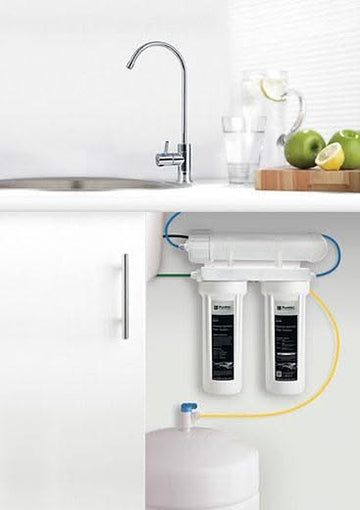
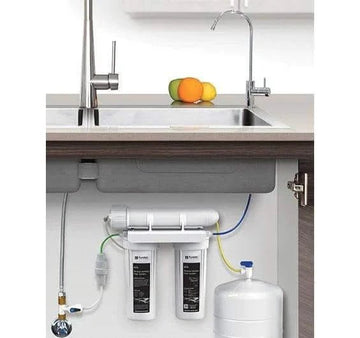
The complete system normally contains more than just the RO membrane. Pre-filters protect the membrane, the membrane performs the primary reverse osmosis treatment, and post-filtration or optional remineralisation may be used before the water reaches the drinking-water outlet.
Pre-Filtration
Sediment and carbon filtration can prepare the incoming water and protect the RO membrane from conditions that would reduce its service life or performance.
RO Membrane
The semi-permeable membrane is the core treatment stage and separates product water from a concentrated reject-water stream.
Post-Treatment
Depending on the system, treated water can pass through a final polishing or remineralisation stage before reaching the drinking-water tap.
How Does Reverse Osmosis Work?
In natural osmosis, water tends to move through a semi-permeable membrane toward the side with the greater dissolved-solute concentration. Reverse osmosis uses water pressure to drive the process in the opposite direction, producing a lower-concentration product-water stream while directing the more concentrated water to waste.
1. Incoming Water Is Pre-Filtered
Pre-filtration captures material and treats water conditions that could otherwise affect the RO membrane.
2. Water Reaches the RO Membrane
Incoming pressure drives water toward and through the membrane surface.
3. Product Water Passes Through
A portion of the water passes through the membrane and becomes the treated product-water stream.
4. Concentrated Water Is Rejected
Another portion carries concentrated dissolved material away from the membrane through the system's reject-water line.
5. Water Is Stored or Supplied Directly
Depending on the RO design, treated water is either stored in a pressure tank or produced through a higher-output continuous-flow system.
6. Water Reaches the Drinking Outlet
Product water passes through any final treatment stage and is supplied to the dedicated drinking-water outlet.
What Does a Reverse Osmosis Water Filter Reduce?
Reverse osmosis is particularly useful for reducing many dissolved substances that conventional sediment filtration does not target. Actual contaminant reduction varies between systems, membranes and operating conditions, so specific claims should always be checked against the individual product's verified performance.
| Water Issue | Typical RO Treatment Role | Important Consideration |
|---|---|---|
| Total Dissolved Solids (TDS) | RO membranes are designed to substantially reduce many dissolved ions | Actual rejection varies with membrane, pressure and water chemistry |
| Dissolved salts | A core strength of reverse osmosis treatment | Not all dissolved substances are rejected at exactly the same rate |
| Fluoride | RO is commonly used where fluoride reduction is a treatment goal | Check the individual system's verified performance |
| Nitrate / nitrite | Suitable RO systems can reduce these dissolved ions | Specific reduction claims should be product verified |
| Selected metals | RO can reduce many dissolved metal ions | Performance varies by contaminant and system |
| PFAS | Suitable RO systems can be used for PFAS reduction | Do not assume every RO system has identical verified performance |
| Chlorine, taste & odour | Usually handled primarily by carbon stages around the RO membrane | Pre/post filtration forms part of the complete system |
| Sediment | Normally removed by pre-filtration rather than the membrane itself | Protecting the membrane is important |
| Microorganisms | Do not assume an RO system is a microbiological treatment system | Use products and treatment validated for the specific requirement |
Reverse Osmosis Certification & Verified Performance
Water-filter marketing can contain very broad treatment claims. For reverse osmosis, independent testing and certification provide a stronger basis for comparing what a specific system is designed and verified to do.
Relevant certification can include standards covering reverse-osmosis system performance and individual contaminant-reduction claims. Not every RO system carries the same certifications or has been tested for the same substances.
System Certification
Look for third-party verification applicable to reverse-osmosis systems, including relevant NSF/ANSI standards where certification is important to the purchase decision.
Contaminant-Specific Claims
A system being called reverse osmosis does not prove every possible reduction claim. Check the individual model's performance data for the substance you actually care about.
Types of Reverse Osmosis Water Filters
Residential RO systems can be built around different production rates, storage methods and post-treatment configurations. The best type depends on how much purified water the household uses and the available kitchen space.
Tank-Based Reverse Osmosis
Traditional RO systems produce water progressively and store treated water in a pressure tank ready for use at the drinking-water tap.
Continuous-Flow Reverse Osmosis
Higher-output systems can produce purified water on demand without relying on a conventional large storage tank, although their plumbing, power and installation requirements can differ.
Compact Reverse Osmosis
Compact systems are designed around kitchens where cupboard space is limited but reverse-osmosis treatment is still preferred.
RO with Remineralisation
Some systems add a post-treatment stage that introduces selected minerals or adjusts the character of the product water after reverse osmosis.
Dedicated Kitchen RO
Most residential RO systems focus on the kitchen drinking-water outlet rather than treating the much larger volume used throughout the entire home.
Higher-Demand RO Systems
Higher-production systems suit homes or applications using greater quantities of purified water and need to be selected around realistic daily demand.
Tank vs Continuous-Flow Reverse Osmosis
One of the biggest differences between RO systems is whether purified water is stored for later use or produced through a higher-output continuous-flow configuration.
| Feature | Tank-Based RO | Continuous-Flow RO |
|---|---|---|
| Purified water supply | Produced and stored before use | Higher-rate production as water is required |
| Storage tank | Normally required | Often not required or substantially reduced |
| Cupboard space | Tank takes additional space | Can save tank space but system itself may be larger |
| Electrical power | Depends on system design | Commonly required on powered high-output systems |
| Tap flow | Supported by stored-water pressure | Depends more directly on production system and pump |
| Complexity | Traditional, established design | More active equipment and controls may be used |
| Best suited to | Normal residential drinking-water demand | Higher use or customers wanting reduced reliance on storage |
Reverse Osmosis vs Standard Under Sink Water Filters
Both systems can provide excellent kitchen drinking water, but they use different treatment methods and have different installation and maintenance requirements.
| Feature | Reverse Osmosis | Standard Under Sink Filter |
|---|---|---|
| Main treatment method | Semi-permeable RO membrane plus supporting filtration | Cartridge filtration media |
| Dissolved-solids reduction | A major strength of RO | Depends heavily on specialist cartridge media |
| Reject water | Yes | Normally no |
| Installation equipment | Generally more components | Usually simpler and more compact |
| Maintenance | Pre-filters, membrane and other system components | Primarily cartridge replacement |
| Space requirement | Generally higher | Generally lower |
| Best suited to | More advanced point-of-use purification | General drinking-water filtration |
Does Reverse Osmosis Waste Water?
Reverse osmosis produces two water streams: treated product water that passes through the membrane and a concentrated reject-water stream that carries material away from the membrane.
That reject-water stream is a normal part of the RO process. The amount varies substantially between systems and can be affected by membrane design, water pressure, temperature, production rate and system configuration.
Product Water
This is the treated water that has passed through the RO membrane and is sent toward the drinking-water outlet or storage tank.
Reject Water
This stream carries concentrated dissolved material away from the membrane and is normally discharged to drainage.
Reverse Osmosis & Total Dissolved Solids (TDS)
TDS is commonly discussed with reverse osmosis because RO membranes can reduce many dissolved ions in water. A TDS meter estimates the concentration of dissolved ionic material by measuring electrical conductivity.
A lower TDS reading after the membrane can therefore be useful when checking general RO membrane performance, but TDS does not identify which individual substances are present and should not be treated as a complete water-quality or safety test.
Does Reverse Osmosis Remove Minerals from Water?
Reverse osmosis reduces many dissolved ions, which means naturally occurring mineral ions can also be reduced along with substances the homeowner is trying to target.
Some customers prefer the taste and low dissolved-solids profile of standard RO water. Others prefer a system that includes a remineralisation or pH-adjustment stage after the membrane.
Standard RO Water
Water passes through the membrane and any final polishing stages without deliberately adding minerals back into the product stream.
Remineralised RO Water
An additional post-treatment cartridge introduces selected minerals or changes the final characteristics of the product water.
Reverse Osmosis Tap & Kitchen Outlet Options
RO water needs a suitable drinking-water outlet. The exact setup depends on the selected RO system, flow requirements, kitchen layout and tap compatibility.
Dedicated RO Drinking-Water Tap
A separate tap provides a dedicated outlet for purified water while the existing kitchen mixer continues to supply normal hot and cold water.
Compatible Multi-Function Mixer
Where the system and mixer are compatible, filtered water can be incorporated into a kitchen mixer designed with a separate drinking-water pathway.
Compare 3-way kitchen mixers →How Much Cupboard Space Does Reverse Osmosis Need?
RO generally requires more under-sink space than a simple cartridge filter because the system can include several pre-filters, the RO membrane, post-treatment, tubing, drainage connections and sometimes a storage tank, pump or controller.
Allow Space For:
- Pre-filter cartridges.
- RO membrane housing or module.
- Post-filter or remineralisation stage where fitted.
- Storage tank on tank-based systems.
- Pump or controller where fitted.
- Water supply tubing.
- Reject-water drainage connection.
- Filtered-water outlet tubing.
- Existing sink waste and plumbing.
- Future cartridge and membrane replacement.
Why Water Pressure Matters for Reverse Osmosis
RO membrane performance is affected by incoming water pressure. The membrane needs sufficient pressure differential to produce treated water effectively, and some systems use a booster pump to maintain the conditions required by their design.
Pressure can influence:
- Product-water production rate.
- Membrane rejection performance.
- Reject-water performance.
- Tank refill time on storage systems.
- Tap flow on some configurations.
- Whether a booster pump is appropriate.
Reverse Osmosis Water Filter Installation Brisbane & Gold Coast
JR Gas & Water supplies and installs reverse osmosis drinking-water systems throughout Brisbane, the Gold Coast and surrounding South East Queensland areas.
RO installation requires more than mounting a filter beneath the sink. The water supply, reject-water drainage, product-water outlet, storage or continuous-flow equipment and future servicing access all need to be considered.
1. Assess the Kitchen
Check usable cupboard space, plumbing layout, incoming water supply and the preferred drinking-water outlet.
2. Select the RO System
Match production capacity, tank or continuous-flow design and treatment configuration to actual household use.
3. Connect the Feed Water
Connect the RO system to the appropriate cold-water supply beneath the sink.
4. Connect Reject Water
Install the drainage connection required for the reverse-osmosis reject-water stream.
5. Connect the Drinking Outlet
Connect the product-water line to the selected compatible drinking-water tap or mixer arrangement.
6. Flush, Test & Commission
Flush the system according to its requirements, test connections and confirm correct operation before completion.
How Much Does a Reverse Osmosis Water Filter Cost?
Reverse-osmosis cost varies according to membrane technology, production capacity, storage design, number of supporting filtration stages, remineralisation, tap arrangement and installation requirements.
JR Gas & Water displays current reverse-osmosis products and installed pricing in the live range above so customers can compare actual systems rather than relying on a broad generic price range.
What Changes the Installed Price?
- RO system selected.
- Tank-based versus continuous-flow design.
- Production capacity.
- Number and type of pre-filters.
- Post-filtration or remineralisation.
- Booster pump or powered equipment.
- Dedicated tap or compatible mixer.
- Available cupboard space.
- Existing plumbing layout.
- Reject-water drainage connection.
- Removal or replacement of an existing system.
- Additional plumbing or electrical requirements.
Reverse Osmosis Maintenance & Filter Replacement
Reverse-osmosis systems have several consumable components. Pre-filters protect the membrane, the membrane itself has a finite service life, and post-treatment cartridges may also require replacement.
Pre-Filters
Sediment and carbon pre-filters should be replaced according to system requirements so they continue protecting the RO membrane.
RO Membrane
Membrane life depends on incoming water, usage, pressure, pre-filtration and the design of the individual system.
Post-Filters
Final polishing or remineralisation cartridges have their own service requirements where fitted.
Storage Tank
Tank-based systems should be inspected and maintained according to the manufacturer's requirements.
Drain & Tubing
Water lines and the reject-water pathway should remain correctly connected and free from leaks or obvious restrictions.
System Performance
Water production, flow and general membrane performance can be checked during scheduled servicing.
Compare RO membranes & replacement cartridges →
What We Have Learned From Installing Reverse Osmosis Systems
Not Every Home Needs RO
Reverse osmosis is excellent when its treatment capability is wanted, but a simpler under-sink system can be the better choice where RO is unnecessary.
Pressure Changes Performance
The same membrane can behave differently when incoming pressure and operating conditions change.
Cupboard Space Matters
Tank-based RO systems in particular can consume much more kitchen storage space than customers initially expect.
Reject Water Is Part of RO
The drain connection is a normal part of the membrane-separation process and needs to be planned as part of the installation.
Certification Matters for Specific Claims
If a customer is purchasing RO for one specific water concern, we prefer to compare verified product data rather than rely on generic RO marketing.
Maintenance Protects the Membrane
Pre-filter servicing directly affects the conditions under which the more expensive RO membrane operates.
Common Reverse Osmosis Mistakes
Assuming All RO Systems Are Equal
Membranes, production rates, certifications, recovery and supporting filtration vary significantly between systems.
Choosing by Stage Count
More stages do not automatically improve an RO system. The membrane and the purpose of each supporting stage matter more.
Ignoring Water Pressure
Poor incoming pressure can affect membrane production and may change which system is appropriate.
Forgetting Reject Water
Reverse osmosis needs a suitable drainage pathway for the concentrate stream.
Buying Without Measuring Cabinet Space
A storage tank, membrane, filters and sink plumbing can compete for the same limited cupboard area.
Using TDS as a Complete Water Test
TDS indicates total ionic concentration but does not identify individual contaminants or prove that water meets every treatment objective.
Reverse Osmosis Water Filters Brisbane & Gold Coast
Reverse Osmosis Brisbane
JR Gas & Water supplies and installs under-sink reverse-osmosis systems throughout Greater Brisbane, Logan, Ipswich, Redlands, Moreton Bay, Scenic Rim and surrounding areas.
We can compare tank-based, compact and continuous-flow RO systems around the household's purified-water demand, kitchen layout and preferred outlet.
Reverse Osmosis Gold Coast
JR Gas & Water installs reverse-osmosis drinking-water systems throughout the Gold Coast, including standard under-sink systems and higher-output continuous-flow configurations.
The correct system depends on treatment requirements, daily use, available cupboard space, incoming water pressure and long-term servicing preferences.
Reverse Osmosis Water Filter FAQs
What is reverse osmosis water filtration?
Reverse osmosis is a membrane-based water-treatment process. Water pressure drives a portion of the incoming water through a semi-permeable membrane, creating a treated product-water stream and a separate concentrate or reject-water stream.
Is reverse osmosis better than a normal water filter?
Not automatically. RO provides much broader dissolved-substance reduction than many conventional cartridge filters, but it also uses more equipment, requires drainage and generally needs more maintenance. The better system depends on the treatment goal.
What does reverse osmosis remove from water?
RO membranes can reduce many dissolved salts, ions and other dissolved substances. Actual performance varies by membrane and contaminant, so specific reduction claims should be checked against the individual system's verified performance.
Does reverse osmosis remove fluoride?
Reverse osmosis is commonly used where fluoride reduction is a treatment objective. The actual reduction performance should still be checked against the specific RO system being considered.
Does reverse osmosis reduce PFAS?
Suitable reverse-osmosis systems can be used for PFAS reduction, but performance should not be assumed to be identical across every RO product. Where PFAS is the reason for purchase, check the exact system's tested or certified claims.
Does reverse osmosis remove chlorine?
RO systems commonly use carbon pre-filtration to reduce chlorine before water reaches the membrane. Chlorine treatment is therefore generally a job for the supporting carbon filtration rather than the RO membrane alone.
Does reverse osmosis remove minerals?
RO reduces many dissolved ions, including mineral ions. Some systems provide standard low-dissolved-solids RO water, while others add a remineralisation or post-treatment stage after the membrane.
Does reverse osmosis waste water?
Yes. Reverse osmosis creates a treated product-water stream and a concentrated reject-water stream. The amount of reject water varies by system, pressure, membrane design and operating conditions.
What is the difference between tank and tankless reverse osmosis?
Traditional tank-based RO produces water progressively and stores it for use. Continuous-flow or tankless systems use higher-output equipment to produce purified water at a greater rate without relying on a conventional large storage tank.
Does reverse osmosis need electricity?
It depends on the system. Some conventional tank-based systems can operate using incoming water pressure, while many high-output or continuous-flow systems use powered pumps, controllers or monitoring equipment.
How much space does an RO filter need?
RO normally requires more space than a basic under-sink filter. The system may include pre-filters, a membrane, post-treatment, tubing and a storage tank or powered module. Always measure usable cabinet space before choosing a system.
What does a TDS meter tell me about RO water?
A TDS meter estimates dissolved ionic material from conductivity and can help indicate general membrane performance. It does not identify individual contaminants and is not a complete water-quality test.
How often does an RO membrane need replacing?
There is no universal membrane replacement interval. Service life depends on the individual system, incoming water, pressure, usage and how well the pre-filtration has been maintained.
Can I connect reverse osmosis to a 3-way mixer?
Some RO systems can be connected to suitable filtered-water mixers, but compatibility depends on the RO system and tap design. Do not assume every 3-way mixer suits every tank-based or continuous-flow RO system.
Is reverse osmosis normally a whole-house filter?
Residential reverse osmosis is most commonly used as point-of-use drinking water treatment because whole-house water demand is far greater. For most homes, RO focuses on the water used for drinking and cooking.
Do you install reverse osmosis systems in Brisbane and Gold Coast?
Yes. JR Gas & Water supplies and installs reverse-osmosis drinking-water systems throughout Greater Brisbane, the Gold Coast, Logan, Ipswich, Redlands, Moreton Bay, Scenic Rim and surrounding South East Queensland areas.
Compare Reverse Osmosis & Drinking Water Filters
Reverse osmosis is one specialist part of the broader under-sink and home water-filtration range. Compare the related categories below if you are deciding which drinking-water setup best suits your kitchen.
Choose the Right Reverse Osmosis Water Filter
Compare reverse-osmosis water filtration systems with current products and installed pricing above. If you are unsure whether you need a tank-based, compact or continuous-flow system, or whether reverse osmosis is the right filtration technology for your drinking water, use the RO selection guide or book an onsite quote inspection.