Chlorine Reduction Water Filters for Brisbane & Gold Coast
Chlorine reduction water filters are designed for homes wanting to reduce
chlorine taste and odour in their water. Filtration can be installed at the
kitchen for drinking and cooking water or at the point of entry where broader
whole-house chlorine reduction is preferred.
JR Gas & Water supplies and installs chlorine reduction water filtration
systems throughout Greater Brisbane, the Gold Coast, Logan, Ipswich, Redlands,
Moreton Bay, Scenic Rim and surrounding South East Queensland areas.
Our range includes under-sink drinking-water filters, whole-house carbon
filtration, covered and enclosed systems, filtered-water mixers and combined
whole-home plus kitchen filtration packages.
The right chlorine filter depends on where you notice the chlorine, how much
water needs to be treated, household flow, filtration media, cartridge
capacity and whether the water contains free chlorine, chloramine or another
water-treatment residual.
JR Installer Verdict:
Start by deciding whether the concern is mainly drinking-water taste at the
kitchen or chlorine smell throughout the property. That normally determines
whether an under-sink filter, whole-house filter or combination setup is the
better direction.
Why Is Chlorine Used in Drinking Water?
Chlorine is widely used by water authorities as a disinfectant because it can
inactivate microorganisms and provide a disinfectant residual through the
water distribution network.
That residual helps protect treated water as it travels from the treatment
plant through reservoirs, pipes and local distribution infrastructure before
reaching the property.
The Australian Drinking Water Guidelines set a health-based guideline value
of 5 mg/L for total chlorine in drinking water. Actual residual concentrations
in reticulated water are normally much lower and can vary through the network.
Australian reference:
The National Health and Medical Research Council provides current guidance on
chlorine in drinking water and its use as a disinfectant.
View NHMRC chlorine guidance →
JR Installer Verdict:
The presence of chlorine does not automatically mean the mains water is
unsafe. Chlorine is intentionally used for disinfection. Residential
filtration is usually about reducing the residual chlorine reaching the home
after it has already performed that job in the public water network.
What Does a Chlorine Water Filter Do?
Residential chlorine filtration normally uses suitable activated-carbon media
to reduce free chlorine as water passes through the filter. Carbon is also
widely used for improvement of chlorine-related taste and odour.
Performance depends on the carbon media, amount of media, water flow, contact
time and how much water the cartridge or filter bed has already treated.
Chlorine Reduction
Suitable activated-carbon filtration can reduce free chlorine present in the
incoming water supply.
Taste & Odour
Reducing chlorine can improve the taste and smell noticed when drinking,
cooking, filling bottles or using water around the home.
Whole-Home or Point-of-Use
Carbon filtration can be configured for a dedicated kitchen outlet or for
higher whole-house flow depending on the system selected.
JR Installer Verdict:
Carbon volume and water contact time matter. A small drinking-water cartridge
and a large whole-house carbon filter can both reduce chlorine, but they are
designed to treat completely different water volumes and flow rates.
Chlorine vs Chloramine – What Is the Difference?
Free chlorine and chloramine are not the same disinfectant. Chloramines are
formed when chlorine reacts with ammonia or other nitrogen compounds, with
monochloramine commonly used where a more persistent disinfectant residual is
required.
That difference matters when choosing a water filter because a cartridge that
performs strongly for free chlorine should not automatically be assumed to
provide the same performance for chloramine.
| Feature |
Free Chlorine |
Monochloramine |
| Use in water treatment |
Common primary and residual disinfectant |
Used where a longer-lasting residual is useful |
| Persistence |
Generally less persistent |
More persistent through distribution systems |
| Carbon treatment |
Commonly reduced with suitable activated carbon |
Requires media and contact time appropriate to chloramine |
| Filter selection |
Check verified free-chlorine performance |
Check specific chloramine performance |
| Generic carbon claim enough? |
No – product performance still matters |
No – particularly important to verify chloramine capability |
JR Installer Verdict:
If chloramine is the treatment target, do not buy a cartridge simply because
it says "chlorine filter". Check whether the exact cartridge or system has
performance specifically suited to chloramine.
How Does Activated Carbon Reduce Chlorine?
Activated carbon has a highly porous internal structure and a very large
surface area. Water passes through or around the media, allowing chlorine,
taste and odour compounds and selected other substances to interact with the
carbon.
The important factors are not simply whether carbon is present, but what type
of carbon is used, how much media is available and how quickly water passes
through it.
Carbon Media
Different activated carbons have different pore structures and treatment
characteristics.
Contact Time
Water needs appropriate interaction with the filtration media. Extremely high
flow through too little media can reduce treatment performance.
Media Capacity
Carbon does not have unlimited treatment capacity. Cartridge size, water use
and servicing all affect long-term performance.
JR Installer Verdict:
For whole-house chlorine reduction, more carbon media can be more useful than
simply adding more filter housings. The treatment media and flow through it are
what actually matter.
Chlorine Filter Certification & NSF/ANSI 42
Independent certification is useful when comparing chlorine reduction
filters because it provides product-specific evidence rather than relying only
on marketing claims.
NSF/ANSI 42 covers drinking-water treatment systems certified for aesthetic
effects such as chlorine reduction and taste or odour improvement.
Certification applies to the individual product and claim. A filter being
NSF certified for another purpose does not automatically mean it carries a
specific chlorine reduction claim.
JR Installer Verdict:
Where verified chlorine reduction matters, check the exact certification and
claim attached to the cartridge or system rather than relying on an
NSF logo by itself.
Types of Chlorine Reduction Water Filters
Chlorine filtration can be applied at a single drinking-water outlet or across
the whole home. The correct system depends mainly on where you want the
chlorine reduction to occur.
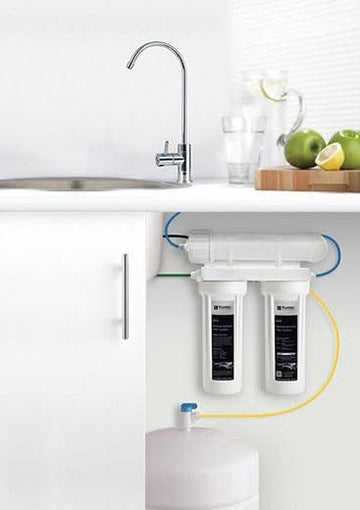
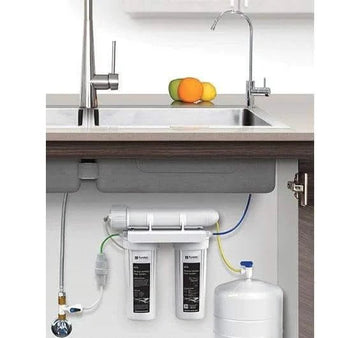
Under Sink Chlorine Filters
Point-of-use carbon filtration treats the water used for drinking, cooking,
tea, coffee and bottle filling without filtering the complete household
supply.
Compare under-sink filters →
Whole House Chlorine Filters
Whole-house filtration treats incoming water before it is distributed to
multiple taps, showers and fixtures throughout the property.
Compare whole-house filters →
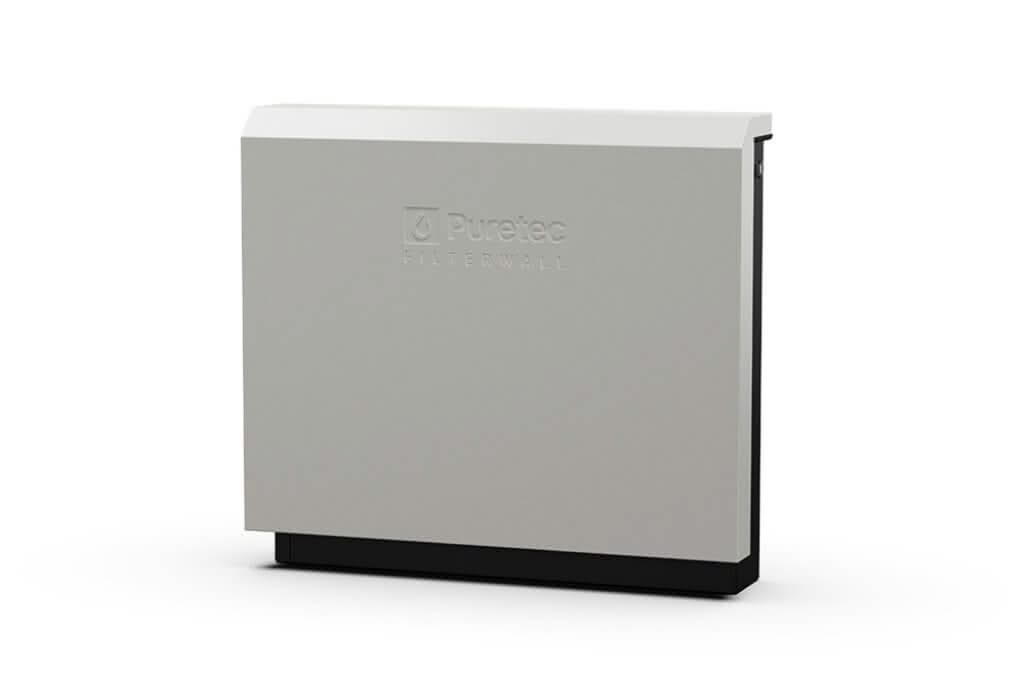
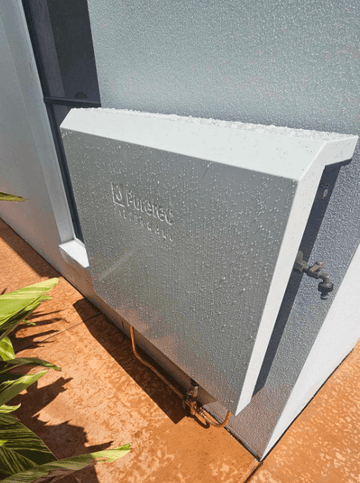
Covered & Enclosed Systems
Premium whole-house filtration can be installed inside a covered or enclosed
cabinet for a cleaner external appearance.
Compare covered & enclosed systems →
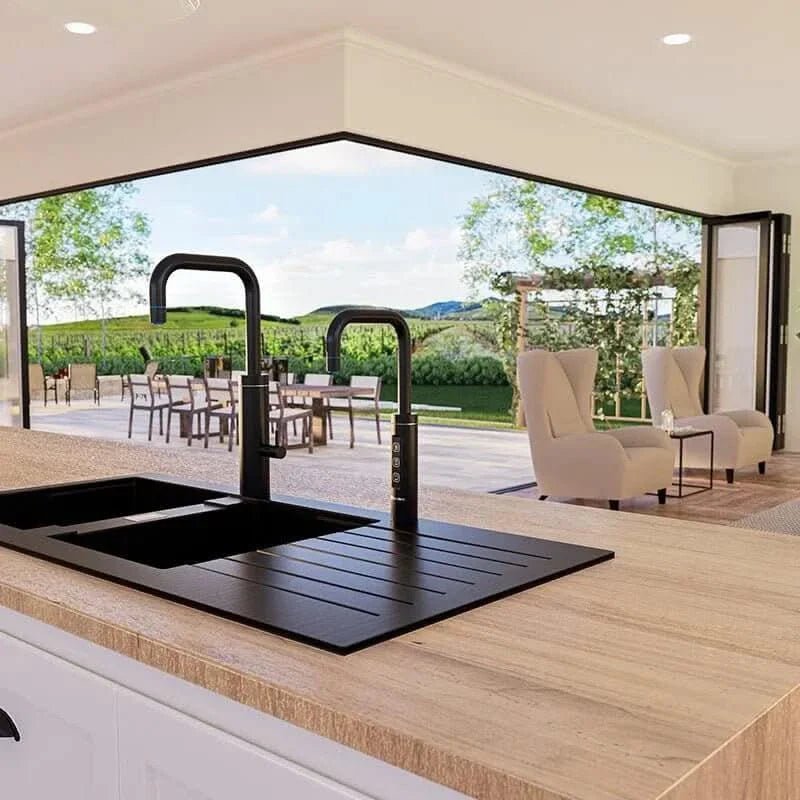
Dedicated Filter Tap Systems
A dedicated kitchen outlet keeps filtered drinking water separate from the
normal hot and cold kitchen supply.
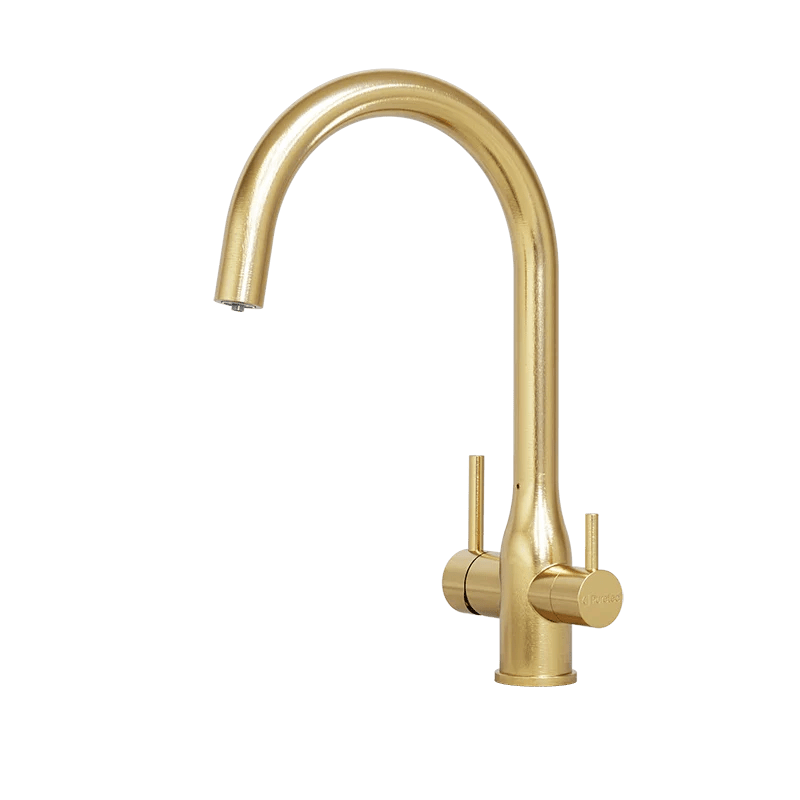
3-Way Mixer Filtration
Compatible 3-way mixers provide normal hot, normal cold and filtered drinking
water through one kitchen tap body.
Compare 3-way kitchen mixers →
Reverse Osmosis Systems
RO systems commonly use carbon pre-filtration for chlorine while adding
membrane treatment for broader dedicated drinking-water purification.
Compare reverse osmosis →
Whole House vs Under Sink Chlorine Filters
The main decision is whether chlorine reduction is wanted only in drinking
water or throughout the broader household supply.
| Feature |
Whole-House Chlorine Filter |
Under-Sink Chlorine Filter |
| Installation point |
Incoming household water supply |
Kitchen cabinet |
| Water treated |
Multiple downstream fixtures |
Dedicated drinking-water outlet |
| Flow requirement |
High household flow |
Lower drinking-water flow |
| Drinking-water taste |
Can improve depending on selected filtration |
Directly focused on kitchen drinking water |
| Showers |
Can receive chlorine-reduced water |
Not treated |
| Carbon capacity |
Larger media capacity required |
Lower water volume |
| Best suited to |
Broader household chlorine reduction |
Drinking and cooking water |
JR Installer Verdict:
If chlorine is mainly noticeable when drinking water, start at the kitchen.
If the smell is noticeable in showers and across multiple fixtures, whole-house
filtration is the more logical starting point.
Can Whole House & Kitchen Chlorine Filtration Be Used Together?
Yes. A combined setup can use high-flow whole-house filtration for the broader
property and a separate kitchen filter for more specialised drinking-water
treatment.
Whole-House Layer
The point-of-entry system reduces chlorine across the water supply feeding
multiple fixtures in the home.
Kitchen Drinking-Water Layer
A separate under-sink filter treats the smaller volume used for drinking,
cooking, tea and coffee.
JR Installer Verdict:
For many family homes, whole-house filtration plus a dedicated kitchen filter
is a strong arrangement because each system is designed around a different
flow rate and use.
Chlorine Taste & Smell in Drinking Water
People vary in how sensitive they are to chlorine taste and odour. The
Australian Drinking Water Guidelines note that chlorine can become noticeable
by smell at concentrations well below the health-based guideline value.
That means water can meet drinking-water guidelines while a homeowner still
prefers to reduce the residual chlorine for taste or odour reasons.
Kitchen Drinking Water
A compact carbon filtration system can target the relatively small amount of
water used for drinking, cooking and beverages.
Whole-Home Chlorine Smell
Where chlorine is noticeable beyond the kitchen, point-of-entry filtration
can reduce the residual before water travels through the home.
JR Installer Verdict:
Do not confuse an aesthetic chlorine concern with a claim that the supplied
water is unsafe. Many customers simply prefer the taste and smell after the
residual chlorine has been reduced.
Why Flow Rate Matters for Chlorine Reduction
Water flow affects how long water interacts with the activated-carbon media.
This is especially important for whole-house systems where several showers,
taps and appliances may operate at the same time.
A filtration system needs enough flow capacity for the household while also
providing appropriate treatment conditions.
| Application |
Main Requirement |
Key Consideration |
| Kitchen drinking water |
Practical tap flow |
Low total water volume allows compact filtration |
| Small whole-house system |
Support normal household demand |
Carbon capacity and pressure loss both matter |
| Family home |
Simultaneous fixtures |
System needs sufficient media at peak flow |
| Multiple bathrooms |
High peak water demand |
Larger filtration may be required |
| Chloramine treatment |
Suitable media and contact time |
Verify system-specific chloramine performance |
JR Installer Verdict:
Do not size a whole-house chlorine filter from pipe diameter alone. Household
peak flow, carbon volume and treatment performance need to be considered
together.
Activated carbon is available in different forms and can be manufactured from
different raw materials. Filter design, pore structure, media volume and
specific treatment claims all influence performance.
Granular Activated Carbon
GAC uses loose activated-carbon granules and is widely used in water treatment
for adsorption of taste and odour compounds and selected contaminants.
Carbon Block
Carbon-block cartridges compress carbon into a solid structure and can combine
carbon treatment with controlled filtration characteristics.
Specialist Carbon Media
Some cartridges use specialised or modified carbon designed for particular
treatment requirements such as improved chloramine performance.
JR Installer Verdict:
"Contains carbon" is not enough information to compare filters. Check the
actual media, flow rating, capacity and verified reduction claims of the
individual cartridge.
What Size Chlorine Water Filter Do I Need?
Sizing depends mainly on whether filtration is point-of-use or whole-house.
A kitchen filter treats a relatively small amount of water, while a whole-home
system needs to support the peak flow of the complete property.
Whole-House Sizing Factors
- Number of bathrooms.
- Number of occupants.
- Peak simultaneous water use.
- Incoming pipe size.
- Available water pressure.
- Carbon media volume.
- Cartridge flow rating.
- Required chlorine or chloramine performance.
- Acceptable pressure loss.
- Expected cartridge service life.
JR Installer Verdict:
For chlorine reduction, bigger media capacity can be more meaningful than
simply adding more filter stages. The system still needs to support realistic
household water flow.
Chlorine Water Filter Installation Brisbane & Gold Coast
JR Gas & Water supplies and installs chlorine reduction filtration
throughout Brisbane, the Gold Coast and surrounding South East Queensland
areas.
Installation varies from a compact kitchen filter through to a high-flow
whole-house or enclosed filtration system.
1. Confirm Where Filtration Is Wanted
Decide whether chlorine reduction is required mainly at the kitchen or across
the broader household supply.
2. Select the Filtration Media
Choose a cartridge or system with treatment performance suited to the target
disinfectant.
3. Size for Required Flow
Match the system to drinking-water flow or peak household flow depending on
the installation.
4. Select the Position
Allow enough room for equipment, plumbing and future cartridge replacement.
5. Install & Connect
Install the filtration equipment, valves, pipework and filtered-water outlet
required by the selected setup.
6. Flush, Test & Commission
Flush new carbon media as required, inspect connections and confirm correct
water flow before completion.
How Much Does a Chlorine Water Filter Cost?
Chlorine filtration cost varies substantially between a compact under-sink
filter and a high-capacity whole-house system.
JR Gas & Water displays current chlorine reduction systems and installed
pricing in the live range above so customers can compare actual products
rather than relying on a generic price guide.
What Changes the Installed Price?
- Under-sink versus whole-house filtration.
- Filter brand and model.
- Carbon media and cartridge type.
- Number and size of housings.
- Required household flow.
- Chloramine-specific treatment where required.
- Covered or enclosed system design.
- Filtered-water tap or mixer.
- Existing plumbing.
- Installation position.
- Replacement cartridge cost.
- Additional plumbing requirements.
JR Installer Verdict:
Compare the complete installed system and future carbon replacement cost.
Long-term media capacity is especially important when a whole-house filter is
treating thousands of litres more water than a kitchen filter.
Chlorine Filter Maintenance & Cartridge Replacement
Activated-carbon filtration media has finite capacity and needs scheduled
replacement. Service life varies with cartridge type, water use, chlorine
concentration, flow and the manufacturer's rated capacity.
Maintenance can include:
- Replacing activated-carbon cartridges.
- Replacing sediment pre-filters where fitted.
- Inspecting housings and seals.
- Checking household water flow.
- Flushing new carbon cartridges.
- Checking filtered-water taps or mixers.
- Recording service dates.
- Confirming the correct replacement cartridge is fitted.
Compare water filter replacement cartridges →
JR Installer Verdict:
Carbon does not last forever. Once the treatment capacity has been used, the
cartridge needs replacing even if water can still physically flow through it.
What We Look for in a Chlorine Reduction Water Filter
Correct Carbon Media
The cartridge should be selected around the actual chlorine or chloramine
treatment requirement rather than a generic carbon description.
Useful Media Capacity
Whole-house systems in particular need enough treatment media to handle the
large amount of water used by the property.
Realistic Water Flow
The filtration system should support normal household demand without creating
an unnecessary pressure restriction.
Verified Performance
Where chlorine reduction is the reason for purchase, independent performance
data or certification gives stronger evidence than a generic marketing claim.
Replacement Availability
The system should use replacement cartridges that remain easy to source when
servicing becomes due.
The Right Treatment Location
There is little benefit in paying to filter every litre in the home if the
customer only wants better tasting kitchen water.
Common Chlorine Water Filtration Mistakes
Assuming All Carbon Is the Same
Different carbon types, cartridge designs and media volumes can produce very
different filtration performance.
Confusing Chlorine with Chloramine
A filter designed for free-chlorine reduction should not automatically be
assumed to provide equivalent chloramine treatment.
Choosing by Number of Stages
A three-stage filter is not automatically better at reducing chlorine than a
correctly designed single or twin carbon system.
Undersizing Whole-House Filtration
A small cartridge can provide excellent low-flow performance while being
completely unsuitable for several simultaneous household fixtures.
Ignoring Cartridge Capacity
Treatment media needs enough capacity to maintain useful chlorine reduction
over its intended service life.
Waiting for Flow to Stop Before Servicing
A carbon cartridge can continue passing water after its useful treatment
capacity has declined. Service intervals should not be based only on flow.
Chlorine Water Filters Brisbane & Gold Coast
Chlorine Water Filters Brisbane
JR Gas & Water supplies and installs chlorine reduction filtration
throughout Greater Brisbane, Logan, Ipswich, Redlands, Moreton Bay, Scenic Rim
and surrounding areas.
Options range from compact kitchen drinking-water filters through to
high-capacity whole-house and enclosed filtration systems.
Chlorine Water Filters Gold Coast
JR Gas & Water installs chlorine reduction systems throughout the Gold
Coast, including under-sink filtration, 3-way filtered mixers and whole-home
carbon filtration.
The right setup depends on whether the treatment goal is kitchen drinking
water, broader household filtration or both.
Chlorine Water Filter FAQs
What is the best water filter for chlorine?
Suitable activated-carbon filtration is commonly used for chlorine reduction.
The best system depends on whether treatment is required at one drinking-water
outlet or throughout the complete home, as well as required flow, carbon
capacity and verified product performance.
Do water filters remove chlorine?
Suitable activated-carbon water filters can significantly reduce free
chlorine. Actual reduction depends on the media, cartridge design, water flow,
contact time and condition of the filter.
What type of filter reduces chlorine?
Activated-carbon filtration is one of the most common residential treatment
methods for free chlorine. Carbon is available in several forms including
granular activated carbon, carbon block and specialist media.
Does activated carbon remove chlorine?
Suitable activated carbon can reduce free chlorine in water. Performance
varies according to carbon type, media volume, flow, contact time and the
specific filter design.
Does a chlorine filter improve water taste?
Reducing residual chlorine can improve chlorine-related taste and odour in
drinking water. Other taste or odour issues can have different causes and may
require different treatment.
What is the difference between chlorine and chloramine?
Free chlorine and chloramine are different disinfectant residuals. Chloramine
is formed from chlorine and ammonia and is more persistent. A filter suitable
for chlorine should not automatically be assumed to provide the same
chloramine reduction performance.
Can carbon filters reduce chloramine?
Suitable activated-carbon media can be used for monochloramine treatment, but
chloramine performance depends strongly on media type, amount of media and
contact time. Check the individual system's specific chloramine performance.
Is chlorine in Australian tap water unsafe?
Chlorine is intentionally used to disinfect drinking water. The Australian
Drinking Water Guidelines provide a health-based guideline value for total
chlorine. Residential chlorine filtration is commonly selected because a
homeowner prefers less residual chlorine taste or odour rather than because
chlorinated mains water is automatically unsafe.
Should I get a whole-house chlorine filter?
Whole-house filtration is worth comparing if you want chlorine reduction
across multiple household outlets, including showers and bathrooms. If the
main concern is drinking-water taste, an under-sink filter can be the more
targeted option.
Can I use an under-sink filter for chlorine?
Yes. Suitable under-sink carbon filters are widely used where chlorine taste
and odour reduction is mainly wanted in drinking and cooking water.
Can I use whole-house and kitchen filtration together?
Yes. Whole-house filtration can reduce chlorine throughout the property while
a dedicated kitchen system provides additional point-of-use drinking-water
filtration.
Does reverse osmosis remove chlorine?
Reverse-osmosis systems commonly use activated-carbon pre-filtration to reduce
chlorine before water reaches the RO membrane. Chlorine reduction is therefore
normally performed by the supporting carbon filtration rather than relying on
the membrane itself.
What is NSF/ANSI 42?
NSF/ANSI 42 is a drinking-water treatment standard covering aesthetic effects
such as chlorine reduction and taste or odour improvement. Certification
should be checked against the exact filter and claim.
How often should a chlorine filter cartridge be changed?
There is no universal replacement interval. Service life depends on cartridge
type, rated capacity, water use, incoming chlorine level, flow and manufacturer
requirements.
Does chlorine disappear if water is left standing?
Free chlorine can dissipate over time, particularly with exposure to air or
sunlight. That should not be treated as equivalent to a properly selected
filtration system, particularly where water is being used continuously.
Do you install chlorine water filters in Brisbane and Gold Coast?
Yes. JR Gas & Water supplies and installs under-sink, whole-house and
enclosed chlorine reduction filtration throughout Greater Brisbane, the Gold
Coast, Logan, Ipswich, Redlands, Moreton Bay, Scenic Rim and surrounding
South East Queensland areas.
Compare Chlorine Reduction Water Filtration Options
Chlorine reduction can be applied at the kitchen, throughout the complete
home or through a combination of systems. Compare the related filtration
categories below.
Choose the Right Chlorine Reduction Water Filter
Compare chlorine reduction water filtration systems with current products and
installed pricing above. If you are unsure whether you need an under-sink
filter, whole-house filtration, an enclosed system or a combination setup,
book an onsite quote inspection and we can review the water supply, household
flow, installation position and filtration options before you choose.