




Edwards Roof-Mounted Solar
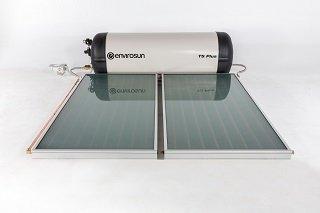
Classic systems positioned both the storage cylinder and collectors on the roof, using natural thermosiphon circulation on suitable designs.


Compare electric, gas, heat pump and solar hot water systems with upfront online pricing. Use our guide to narrow the right system or browse the full installed range.
We’ll work out where you should go next. Sizing and model selection come after.
Drag to compare how your hot water system choice can change what you pay to run it over 10 years.
Real stories from hot water system homeowners who’ve experienced fast installs, expert advice, and 5-star service with JR Gas & Water.
Book an onsite inspection and one of our plumbers can inspect your existing hot water system, review the installation requirements and talk you through suitable replacement options before you choose. We can compare electric storage, heat pump, gas and solar hot water options based on your home and existing setup.
Ideal if you would prefer a plumber to inspect the existing system and discuss your hot water replacement options onsite before choosing.
Spread the cost of your new hot water system with flexible payment options on eligible purchases. Pay securely with Zip, Afterpay, PayPal, Google Pay, Visa or Mastercard .


Edwards was one of Australia's best-known solar hot water manufacturers, particularly recognised for durable roof-mounted solar systems, stainless-steel storage and long service life. Edwards is no longer sold as the major standalone residential hot water brand many homeowners remember, but thousands of older Edwards systems remain installed across Australian homes.
JR Gas & Water diagnoses, repairs and replaces older Edwards hot water systems throughout Brisbane, the Gold Coast and eligible South East Queensland service areas.
Today, an Edwards search is usually a replacement question rather than a new-model buying question: can the existing Edwards still be repaired, should it be replaced with modern roof-mounted solar, or would a heat pump or other current technology now suit the property better?
If a genuine available Edwards appliance is present in JR Gas & Water's live collection, its current advertised price appears below.
Rheem products, unrelated hot water brands and general service products are deliberately excluded and are never presented as Edwards pricing.
The lowest-priced currently available genuine Edwards appliance is the from .
Only genuine available Edwards products are included. Current Rheem replacement systems are separate products and do not count as Edwards prices.
Edwards is no longer marketed as the major standalone hot water range it once was.
Rheem Australia proposed the acquisition of Edwards Hot Water in 2004, and the Solar Edwards business was subsequently integrated into Rheem's solar operation.
In 2013 Rheem formally launched its Solar Specialist Network using the former Edwards dealer network and described the new range as combining Rheem's brand with Edwards solar heritage and expertise.
Edwards developed, manufactured and sold solar water-heating systems for Australian conditions for more than 40 years before the business was integrated into Rheem.
By the time Rheem proposed its acquisition, Edwards was identified by the ACCC as Australia's second-largest supplier of solar water heaters.
The brand became strongly associated with roof-mounted solar systems, stainless-steel cylinders and installations designed for Australian roofs and climate conditions.
Classic systems positioned both the storage cylinder and collectors on the roof, using natural thermosiphon circulation on suitable designs.
Other solar arrangements used roof collectors with the storage cylinder installed at ground level or floor level.
Stainless-steel cylinders became one of Edwards' best-known product characteristics, particularly in roof-mounted solar systems.
Electric elements supplied additional heat when solar gain was insufficient.
Selected solar configurations could use gas boosting rather than relying solely on an electric backup element.
Different Edwards generations were designed around local climate, freezing conditions and water chemistry.
In a typical direct thermosiphon solar arrangement, water heated in the solar collectors naturally rises into the roof-mounted storage cylinder while cooler water moves down toward the collectors.
This circulation occurs without a conventional electric pump while solar energy is available.
A booster then provides additional heating during poor solar conditions or periods of unusually high hot-water demand.
Rheem's current Hiline and Premier Hiline solar systems are particularly relevant when comparing replacements for older Edwards roof-mounted solar.
Rheem itself describes the post-Edwards solar business as combining the Edwards heritage with Rheem's solar range.
Current Rheem Hiline products continue the same broad concept of installing the storage tank and solar collectors together on the roof.
Current direct roof-mounted systems are designed for warmer, frost-free conditions and use natural thermosiphon circulation.
Uses an indirect heat-exchange design to provide greater frost protection for colder climates.
Current Rheem Hiline and Premier Hiline ranges include common 180L and 300L roof-mounted solar configurations.
Stainless-steel and vitreous-enamel tank options vary by series, climate suitability and water chemistry.
| Current solar style | Common capacity | General application |
|---|---|---|
| Rheem Hiline | 180L / 300L | Roof-mounted solar in suitable warmer climates |
| Rheem Premier Hiline | 180L / 300L | Roof-mounted indirect solar with frost protection |
Stainless-steel storage is one of the reasons many older Edwards systems are still remembered for longevity.
Rheem continues to support some Edwards Hiline applications and identifies specific replacement parts as suitable for older Edwards Hiline water heaters.
Current Rheem roof-mounted solar also includes stainless-steel cylinder options in suitable water-quality areas.
Start with the data plate on the storage cylinder or accessible system components.
Useful information includes model number, tank capacity, electrical rating, pressure rating and any identifying series information.
The physical layout is also useful: note whether the tank is on the roof or ground, how many solar collectors are installed and whether the booster is electric or gas.
Age alone does not mean every Edwards system needs immediate replacement. Some faults may still be practical to repair where the storage tank and collectors remain in good condition.
The cylinder remains structurally sound and the problem is limited to a serviceable valve, booster, thermostat, element, fitting or another obtainable component.
The tank is leaking, collectors are deteriorated, roof hardware is ageing, multiple major components need work or replacement parts are becoming difficult to obtain.
Water visible around an Edwards solar system can come from several locations, including valves, collector connections, pipework, fittings or the storage cylinder itself.
A roof leak also does not automatically mean the solar collectors have failed; water can travel before it becomes visible inside or outside the home.
If the actual storage cylinder has perforated or structurally failed, replacement is normally the practical long-term pathway.
An older Edwards solar system with poor hot-water performance does not automatically need complete replacement.
Possible causes can include booster failure, electrical faults, thermostats, valves, circulation problems on split systems, collector performance or insufficient solar gain.
Diagnosis should identify whether the problem is a repairable component or a broader sign that the ageing system is no longer economical to maintain.
Suitable where the current roof layout remains appropriate and the homeowner wants to retain the traditional tank-and-collector roof configuration.
Keeps solar collectors on the roof while moving the storage tank to ground level, reducing roof-mounted storage weight.
Removes the need for solar hot-water collectors and can place the whole replacement pathway at ground level.
Simpler replacement route where upfront cost is prioritised and the property's electrical supply and tariff make electric storage practical.
Heat pumps are now one of the strongest alternatives when an ageing Edwards solar system reaches the end of its useful life.
A heat pump uses ambient air rather than roof-mounted thermal collectors to provide efficient hot water.
This can simplify the property by removing ageing solar pipework, collectors and a roof-mounted cylinder while still providing a lower-energy alternative to conventional electric storage.
Rheem solar is one of the most logical brands to compare when replacing an old Edwards system because the Solar Edwards business and dealer expertise were integrated into Rheem.
For customers wanting to keep a roof-mounted layout, modern Rheem Hiline and Premier Hiline systems can be particularly relevant.
The new installation should still be assessed as a modern system rather than assuming every old Edwards bracket, pipe or roof penetration can simply be reused.
Replacing Edwards solar with a ground-level system can involve removing the old roof tank, collectors, brackets and obsolete pipework.
The replacement scope should clearly state what roof-mounted equipment is being removed and how redundant penetrations and services will be handled.
Roof material, system weight, access and height can all affect the work required.
JR does not recommend blindly copying the capacity written on an old Edwards cylinder.
Our current stored-hot-water sizing method starts at approximately 40 litres per person per day for light use, 50 litres for average use, 65 litres for high use and up to approximately 80 litres for very heavy demand.
We then consider baths, shower duration, multiple bathrooms, system recovery, tariff and replacement technology.
Some Edwards components remain supportable, particularly where later Rheem products share compatible parts.
Rheem currently lists certain spare parts as suitable for older Edwards Hiline water heaters, confirming that some parts support continues.
Availability still depends on the exact model and age. Generic plumbing valves can be much easier to source than model-specific tank, collector or control components.
The old Edwards system itself does not generate a new rebate simply because it is being removed.
However, replacing it with an eligible approved modern heat pump or solar hot water system can qualify for Small-scale Technology Certificates and any applicable current incentive programs.
Eligibility depends on the new system, installation and scheme rules at the time of the work.
JR Gas & Water diagnoses and replaces older Edwards hot-water systems throughout Brisbane, the Gold Coast and eligible South East Queensland service areas.
The correct replacement scope depends on whether the existing Edwards is roof-mounted solar, split solar or another configuration.
Roof access, collector position, plumbing, electrical or gas boosting, drainage, existing brackets, redundant services and the location of the new system all need to be considered before the job is treated as a simple replacement.
Edwards is no longer marketed as the major standalone residential hot water brand it once was. The Solar Edwards business was integrated into Rheem's Australian solar operation.
Rheem Australia proposed the acquisition of Edwards Hot Water in 2004. The ACCC did not oppose the acquisition, and Rheem later integrated the Solar Edwards business and former Edwards dealer network into its solar operation.
Edwards hot-water operations became part of Rheem's Australian business. Rheem later described its Solar Specialist Network as the result of integrating Solar Edwards into Rheem.
Edwards became particularly well known for Australian solar hot-water systems, including roof-mounted solar, split solar and stainless-steel storage cylinders.
Many well-known Edwards solar systems used stainless-steel storage, particularly roof-mounted systems, but tank construction varied by model and generation. Check the data plate before assuming the tank material.
Rheem's solar business absorbed Edwards expertise and dealer support. Modern Rheem Hiline and Premier Hiline systems are therefore useful products to compare when replacing older roof-mounted Edwards solar.
It follows a similar broad roof-mounted solar concept, with the storage tank and solar collectors installed together on the roof. Exact construction and specifications differ between old Edwards systems and current Rheem models.
Current Rheem Hiline and Premier Hiline documentation includes common 180L and 300L roof-mounted solar configurations.
Many direct systems use thermosiphon circulation: solar-heated water rises naturally from the collector into the storage cylinder while cooler water moves down toward the collector.
Potentially. Repair viability depends on the fault, age, cylinder condition, collectors and availability of suitable replacement parts. A small valve or booster fault can be very different from a leaking tank or deteriorated roof system.
Some parts remain available or compatible through Rheem, including certain items Rheem currently lists for Edwards Hiline systems. Availability depends on the specific model and component.
Possible causes include electric or gas booster faults, thermostat or electrical problems, solar circulation issues, valves, collector performance or simply insufficient solar contribution. Diagnosis is needed before deciding the whole system has failed.
Not every leak means the tank has failed. Water may come from valves, fittings, pipework or solar collector connections. If the actual storage cylinder has perforated, replacement is normally the practical long-term solution.
That can make sense where the roof remains suitable and the homeowner wants to retain solar thermal hot water. Current roof-mounted and split solar systems should both be compared.
Yes. Heat pumps are now a common alternative for older Edwards solar installations and can remove the need for roof-mounted solar-water collectors and roof tank components.
Yes, where the electrical supply and installation location are suitable. Electric storage can be simpler upfront but generally uses more purchased energy than efficient heat-pump or solar systems.
Not automatically. Different technologies have different recovery characteristics. JR recommends re-sizing the replacement using the household's current hot-water demand.
That depends on the replacement design and the condition and compatibility of the existing components. Old collectors and brackets should not automatically be assumed suitable for a new system.
Removal of redundant roof-mounted equipment can be included in the agreed replacement scope where required. Roof access, material, equipment weight and redundant penetrations all affect the work.
An eligible new heat pump or solar hot-water system may qualify for Small-scale Technology Certificates and applicable incentives. The rebate relates to the approved replacement system and installation, not simply to the removal of an Edwards unit.
See JR's Hot Water Rebates Queensland page for current information.
Yes. JR Gas & Water can inspect and diagnose older Edwards hot-water systems throughout its Brisbane service area and determine whether repair or replacement is practical.
Yes. JR can replace older Edwards systems throughout its Gold Coast service area with suitable current solar, heat-pump or electric systems.
Yes. Older Edwards installations vary substantially, particularly roof-mounted solar systems. You can request an onsite or written quote before choosing the replacement pathway.
If your Edwards system is still structurally sound, diagnosis can determine whether a practical repair will keep it running. If the tank, collectors or broader roof system have reached the end of their useful life, compare modern roof-mounted solar, split solar, heat pump and electric replacement options around the way your household uses hot water today.
Compare your current hot water system running costs against an efficient heat pump setup and see how much your household could save over 10 years.


