




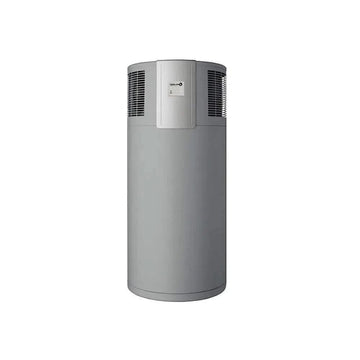
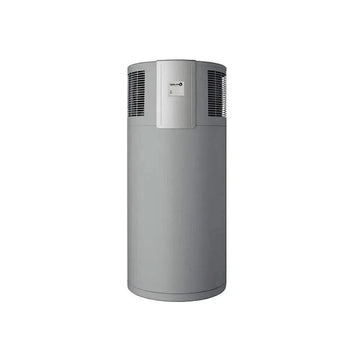
Midea R290 Heat Pumps
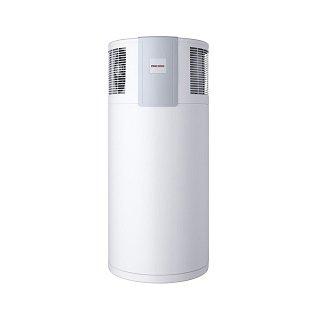
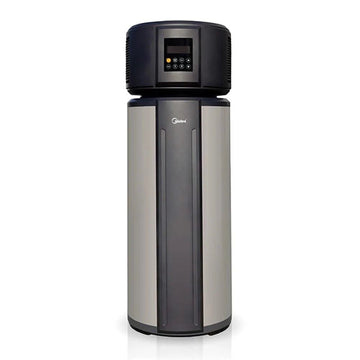
Current Chromagen heat-pump products include Midea 235L and 280L all-in-one systems using newer R290 refrigerant technology.


Compare electric, gas, heat pump and solar hot water systems with upfront online pricing. Use our guide to narrow the right system or browse the full installed range.
We’ll work out where you should go next. Sizing and model selection come after.
Drag to compare how your hot water system choice can change what you pay to run it over 10 years.
Real stories from hot water system homeowners who’ve experienced fast installs, expert advice, and 5-star service with JR Gas & Water.
Book an onsite inspection and one of our plumbers can inspect your existing hot water system, review the installation requirements and talk you through suitable replacement options before you choose. We can compare electric storage, heat pump, gas and solar hot water options based on your home and existing setup.
Ideal if you would prefer a plumber to inspect the existing system and discuss your hot water replacement options onsite before choosing.
Spread the cost of your new hot water system with flexible payment options on eligible purchases. Pay securely with Zip, Afterpay, PayPal, Google Pay, Visa or Mastercard .


Chromagen is one of Australia's long-established renewable hot-water suppliers, with a range spanning solar hot water, Midea heat pumps, continuous-flow gas and electric storage. For homeowners, the main current choices are 235L and 280L Midea R290 heat pumps, Chromagen SplitLine and RoofLine solar systems, and 20L/min or 26L/min continuous-flow gas.
JR Gas & Water supplies, replaces and installs suitable Chromagen hot-water systems throughout Brisbane, the Gold Coast and eligible South East Queensland service areas.
Chromagen has sold several generations of hot-water equipment in Australia, so the product name and model number matter when comparing repairs, replacement systems and specifications.
Live pricing below uses only genuine available Chromagen and Chromagen-Midea hot-water products in JR Gas & Water's current collection.
Bosch, Thermann, generic heat-pump servicing, spare parts and accessories are excluded.
The lowest-priced currently available complete Chromagen system is the from .
Sold-out products, unavailable variants, services, spare parts and unrelated brands are excluded.
| Chromagen category | Current JR price range | Main application |
|---|---|---|
| Chromagen Midea Heat Pump | – | Efficient replacement for electric storage and other systems. |
| Chromagen Solar Hot Water | – | Roof-mounted or split solar thermal hot water. |
| Chromagen Continuous Flow Gas | – | Natural Gas or LPG on-demand hot water. |
| Chromagen Electric Storage | – | Conventional stored electric hot water. |
Current Chromagen heat-pump products include Midea 235L and 280L all-in-one systems using newer R290 refrigerant technology.
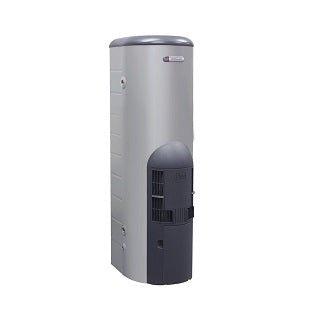
SplitLine, RoofLine and LowLine systems combine solar thermal collectors with electric, Natural Gas or LPG backup options.
Current M-Series products include 20L/min and 26L/min systems for both Natural Gas and LPG.
Chromagen also maintains conventional electric-storage products and support resources, although current public stock is much narrower than its solar, heat-pump and gas ranges.
Chromagen's current heat-pump range uses Midea-manufactured all-in-one systems.
The heat-pump module and storage cylinder are combined into one appliance, making them straightforward replacements for many external electric-storage water heaters.
Model RSJ-V28/235RDN7-L2. Current Chromagen material positions the 235L as a compact family system for roughly three to four occupants, depending on water usage.
FromModel RSJ-23/300RDN7-L2. Current Chromagen material positions the 280L as the larger household option, with capacity suited to homes of up to approximately six people depending on usage.
FromChromagen distributes Midea-manufactured heat-pump water heaters in Australia.
That is why products are commonly referred to as Chromagen Midea, even though Midea is the appliance manufacturer and Chromagen is the Australian supplier and support channel.
Many Australian homes still contain the earlier Chromagen Midea HP170 and HP280 heat pumps.
These older products pre-date the current 235L and 280L R290 generation and should not automatically be assigned the newer product specifications.
Chromagen continues to maintain technical documentation and spare-parts references for HP170 and HP280 variants, including multiple revisions.
| Feature | Current Midea | Older Chromagen Midea |
|---|---|---|
| Main sizes | 235L / 280L | 170L / 280L |
| Current refrigerant | R290 | Older generation / check exact data plate |
| Configuration | All-in-one | Generation dependent |
| Controller | LCD controller | Earlier controller platform |
| Current support | Active current range | Service documentation and spare parts still listed |
Solar thermal hot water remains one of Chromagen's core product categories.
Rather than using rooftop solar panels to generate electricity, solar thermal systems use dedicated collectors to capture heat from sunlight and transfer that heat directly into the hot-water system.
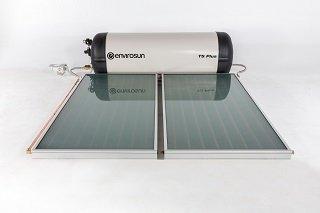
Chromagen currently offers three broad layouts: SplitLine, RoofLine and LowLine.
Ground-level storage tank with roof-mounted solar collectors and pumped solar circulation.
Traditional close-coupled roof-mounted tank and collectors using thermosiphon circulation.
Low-profile roof arrangement designed to keep the system compact where ground-level space is unavailable.
SplitLine separates the storage cylinder from the roof collectors.
The tank remains at ground level while a pump and intelligent solar controller circulate water through roof-mounted collectors when useful solar energy is available.
Current SplitLine combinations include both flat-plate and evacuated-tube collectors in approximately 200L and 300L configurations.
RoofLine places the tank and solar collectors together on the roof.
Heated water naturally rises from the collector into the storage tank using thermosiphon circulation, meaning a separate electric solar circulation pump is not required during normal solar operation.
Current RoofLine packages include 300L systems with twin flat-plate collectors and electric or gas backup options.
LowLine is a specialised roof-mounted format that positions the tank beneath the collector arrangement.
It is intended for properties where ground space is limited and a lower roof profile is desirable compared with a conventional close-coupled system.
Chromagen's traditional collector platform uses a large absorber within a glazed panel to capture solar heat.
Flat-plate collectors are used across current SplitLine and RoofLine configurations.
Current SplitLine products also include 20-tube and 30-tube configurations, allowing solar collection to be matched to storage capacity and household demand.
Solar thermal systems need backup heating for extended cloudy periods and unusually high household demand.
Chromagen currently offers solar packages with electric boosting and configurations using continuous-flow Natural Gas or LPG boosters.
With gas boosting, solar-heated water passes through the continuous-flow unit and gas is only used when extra heat is required.
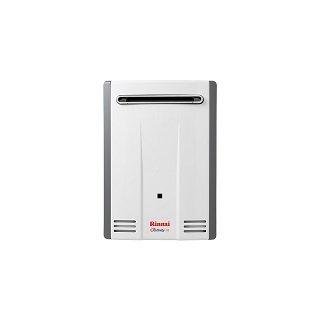
Chromagen's current M-Series gas range includes 20L/min and 26L/min continuous-flow systems.
Both sizes are available in Natural Gas and LPG versions, with current retail products pre-set to 50°C.
Approximately 20L/min continuous-flow capacity. Best suited to lower or moderate simultaneous hot-water demand where the gas supply is correctly sized.
Approximately 26L/min capacity for homes requiring greater simultaneous hot-water flow.
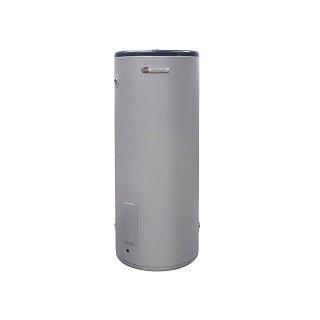
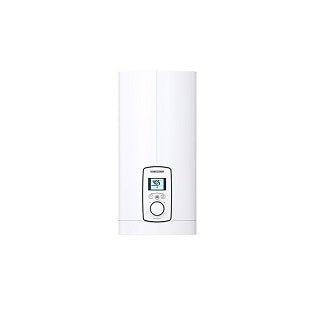
Chromagen also supports conventional electric-storage water heating.
Its current public catalogue is far narrower in this category than its solar, gas and heat-pump ranges, with a 50L electric-storage model appearing in current product listings but showing sold out at the time this page was reviewed.
Electric storage remains mechanically simple but normally consumes more electricity than an efficient heat pump performing the same water-heating duty.
Stored hot water should be sized from actual demand rather than occupant count alone.
JR's starting allowances are approximately 40 litres per person per day for light use, 50 litres for average use, 65 litres for high use and around 80 litres per person for excessive demand.
Strong starting point for smaller and average households where peak demand remains moderate.
Better suited to higher family demand, longer showers and homes needing greater stored reserve.
Suitable where daily demand is lower and collector area, boost strategy and solar contribution are correctly matched.
Chromagen's main family solar capacity and the basis of many current SplitLine and RoofLine packages.
The roof has strong solar exposure and you want dedicated thermal collectors directly heating the water, with electric or gas backup.
You prefer a ground-level all-in-one appliance without solar hot-water collectors on the roof, particularly when replacing electric storage.
Conventional electric storage can be replaced by several different Chromagen technologies.
The current Midea 235L and 280L heat pumps provide the simplest energy-efficient ground-level pathway, while solar thermal can provide a strong renewable option where the roof and property layout suit collectors.
Chromagen's current published warranty periods vary by technology.
| Product | Current published warranty summary |
|---|---|
| Midea Heat Pump | Tank 5 years; compressor 3 years; electronics, parts and labour 1 year. |
| Solar Hot Water | Tank and panels 5 years; labour 3 years; other parts 1 year. |
| Gas Continuous Flow | Heat exchanger 10 years; parts and labour 3 years. |
Full warranty terms, installation requirements and exclusions still apply, so the exact warranty documentation supplied with the product should be retained.
Chromagen maintains a substantial technical-support and spare-parts library, including manuals and service information for solar hot water, gas continuous-flow and multiple generations of Midea heat pumps.
Older HP170 and HP280 systems in particular have several hardware revisions, so the exact model and version should be identified before parts are ordered.
Solar systems also require periodic attention to items such as anodes, valves, booster operation, circulation components and collector performance.
Eligible approved Chromagen solar systems and Midea heat pumps can generate Small-scale Technology Certificates where the exact model and installation satisfy current scheme requirements.
Certificate quantity depends on the product, installation location and current Clean Energy Regulator listing.
Rebate eligibility should therefore be confirmed against the exact current model rather than an older HP170, HP280 or discontinued solar package.
The Chromagen brand dates back to 1962 and has a long history in solar thermal water heating.
Chromagen Australia now distributes a broader energy range including solar hot water, heat pumps, gas continuous-flow systems, air conditioning and solar-energy products.
Chromagen maintains an Australian office, dealer and service network, including a Queensland operation in Meadowbrook.
JR Gas & Water installs suitable Chromagen and Chromagen Midea hot-water systems throughout Brisbane, the Gold Coast and eligible South East Queensland service areas.
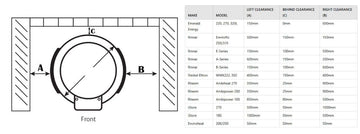
Heat-pump installations need suitable airflow, condensate drainage, electrical supply, base construction and service access.
Solar installations additionally require suitable roof structure, orientation, collector placement, insulated solar pipework and correct booster configuration.
Continuous-flow gas systems require correctly sized gas supply, water flow, electrical supply where applicable and compliant appliance clearances.
Current complete available Chromagen and Chromagen Midea systems at JR Gas & Water range from to .
Chromagen's current Australian range spans solar thermal hot water, Midea heat pumps, continuous-flow gas and selected electric-storage products.
Chromagen's current public heat-pump range consists of 235L and 280L Midea R290 all-in-one systems.
Midea manufactures the heat-pump appliance while Chromagen distributes and supports the products in Australia, which is why they are commonly referred to as Chromagen Midea systems.
The current 235L RSJ-V28/235RDN7-L2 and 280L RSJ-23/300RDN7-L2 use R290 refrigerant.
HP170 was an earlier Chromagen-distributed Midea heat pump. Chromagen still provides manuals and spare-parts documentation for several HP170 revisions.
No. The same approximate tank size exists across different generations, so the full model number must be checked before comparing refrigerant, electrical requirements or parts.
Yes. Solar hot water is one of Chromagen's core product categories, with SplitLine, RoofLine and LowLine configurations.
SplitLine uses a ground-level storage tank and roof-mounted collectors with pumped solar circulation.
RoofLine is a close-coupled roof-mounted solar system using natural thermosiphon circulation between the collector and tank.
LowLine is a low-profile roof-mounted solar configuration designed to position the tank below the collector arrangement.
Yes. Current SplitLine and RoofLine products include flat-plate collector configurations.
Yes. Current SplitLine systems include 20-tube and 30-tube evacuated collector options.
Yes. Current Chromagen solar packages include Natural Gas and LPG continuous-flow booster configurations as well as electric boost.
Yes. Current Chromagen M-Series products include 20L/min and 26L/min systems in both Natural Gas and LPG versions.
Current retail M20 and M26 products are listed in 50°C pre-set configurations.
Chromagen's current FAQ lists five years on the Midea heat-pump tank, three years on the compressor and one year on electronics, parts and labour, subject to the full warranty conditions.
Current Chromagen information lists five years for tank and panels, three years labour and one year on other parts, subject to warranty conditions.
Current Chromagen information lists ten years on the heat exchanger and three years parts and labour, subject to warranty terms.
Often yes. Chromagen maintains a substantial service-documentation and spare-parts library, including material for multiple HP170 and HP280 revisions as well as solar and gas products.
The current 235L Midea can be a logical upgrade, but JR recommends sizing from actual household usage rather than assuming every HP170 installation needs the same replacement.
Four average users represent roughly 200L of daily hot-water demand using JR's 50L-per-person starting point. The Midea 235L, Midea 280L or a correctly sized 300L solar system can all be considered depending on usage, recovery and technology preference.
Yes. The current Midea heat pumps are specifically promoted as straightforward replacements for existing electric-storage water heaters.
Eligible approved Chromagen solar and heat-pump products can generate Small-scale Technology Certificates where the exact model and installation meet current scheme requirements.
See JR's Hot Water Rebates Queensland page for current information.
The Chromagen brand dates to 1962 and operates internationally. Chromagen Australia distributes and supports its hot-water and energy products locally through an Australian office, dealer and service network.
Yes. JR Gas & Water installs suitable Chromagen systems throughout its Brisbane service area.
Yes. Suitable Chromagen heat-pump, solar and gas systems can be installed throughout JR Gas & Water's Gold Coast service area.
Yes. If you are unsure between heat pump, solar, gas or another replacement pathway, you can request an onsite or written quote before choosing the final system.
Start with the technology. Choose the current Midea R290 range where an efficient ground-level replacement for electric storage is the priority. Compare SplitLine or RoofLine where dedicated solar thermal hot water suits the property, or M20/M26 continuous flow where an existing Natural Gas or LPG supply makes gas the preferred pathway. Then size the final system around the household's actual hot-water demand.
Compare your current hot water system running costs against an efficient heat pump setup and see how much your household could save over 10 years.


