Fluoride Water Filters for Brisbane & Gold Coast
Fluoride water filters are drinking-water filtration systems selected
specifically for households wanting to reduce fluoride in the water used for
drinking, cooking, tea, coffee and bottle filling. For most residential
applications, reverse osmosis is the main filtration technology to compare
when fluoride reduction is the priority.
JR Gas & Water supplies and installs fluoride-focused water filtration
systems throughout Greater Brisbane, the Gold Coast, Logan, Ipswich, Redlands,
Moreton Bay, Scenic Rim and surrounding South East Queensland areas.
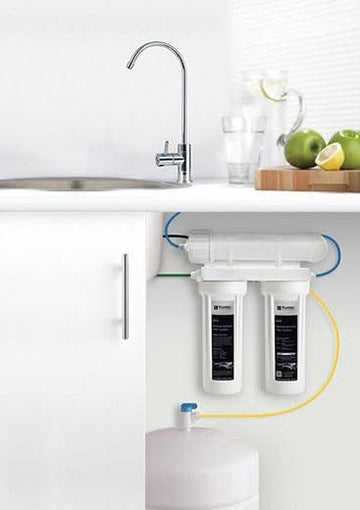
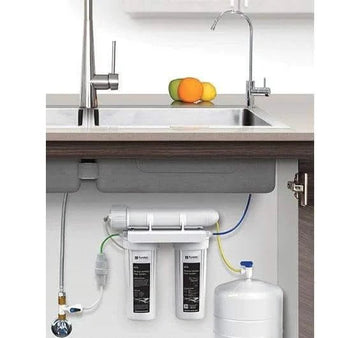
Our fluoride range focuses primarily on under-sink reverse-osmosis systems
because fluoride is normally more practical to target at the kitchen
drinking-water outlet than by processing every litre used by showers,
laundries, toilets and outdoor fixtures.
Not every water filter reduces fluoride. Standard sediment and ordinary carbon
filtration should not automatically be assumed to provide meaningful fluoride
reduction. Where fluoride is the treatment objective, the filtration
technology and individual product performance matter.
JR Installer Verdict:
If fluoride is the main concern, start with reverse osmosis at the drinking
water outlet. Do not buy a standard carbon or whole-house filter expecting it
to perform the same job unless the exact product has verified fluoride
reduction performance.
What Is Fluoride in Drinking Water?
Fluoride is the ionic form of the naturally occurring element fluorine.
Fluoride can occur naturally in water depending on local geology and can also
be added to public drinking-water supplies as part of community water
fluoridation programs.
Australian public-health authorities support water fluoridation as a measure
for reducing dental caries. Some homeowners nevertheless choose to reduce
fluoride in the water they personally drink and cook with, which is where
dedicated fluoride filtration systems are relevant.
Naturally Occurring Fluoride
Fluoride can occur naturally where water interacts with fluoride-containing
rock, soil and geological formations.
Fluoridated Mains Water
Some public water supplies have fluoride added at controlled concentrations
for dental-health purposes.
Personal Filtration Choice
Homeowners who prefer lower-fluoride drinking water can use suitable
point-of-use filtration without needing to treat the complete household
water supply.
Fluoride Levels in Australian & Queensland Drinking Water
The Australian Drinking Water Guidelines set a health-based maximum guideline
value of 1.5 mg/L for fluoride in drinking water.
In Queensland, where a public water supply is fluoridated, Queensland Health
states that the amount added is regulated between 0.6 and 0.8 mg/L depending
on location.
| Reference |
Fluoride Concentration |
What It Means |
| Queensland fluoridation range |
0.6–0.8 mg/L |
Regulated range for fluoride addition depending on location |
| NHMRC typical fluoridation target noted nationally |
Approximately 0.7–1.0 mg/L |
Typical fluoridated drinking-water range described by NHMRC |
| Australian health-based maximum guideline |
1.5 mg/L |
Drinking water should not exceed this concentration |
JR Installer Verdict:
Fluoride filtration should not be sold using claims that normal fluoridated
mains water automatically exceeds Australian drinking-water guidelines.
For most customers this is a personal drinking-water treatment preference,
not evidence that their reticulated water is outside guideline values.
What Type of Water Filter Reduces Fluoride?
Fluoride is dissolved in water, so filtration needs technology capable of
treating dissolved ions rather than simply catching suspended sediment.
Reverse Osmosis
Reverse osmosis uses a semi-permeable membrane and is the primary residential
filtration category JR Gas & Water recommends comparing when fluoride
reduction is the main drinking-water goal.
Compare reverse osmosis →
Activated Alumina
Activated alumina is another recognised treatment medium for fluoride
reduction. Its suitability depends on system design, operating conditions and
the particular application.
Specialist Media
Other specialist treatment media can be used for fluoride reduction where the
individual product is specifically designed and verified for that purpose.
JR Installer Verdict:
For a normal Brisbane or Gold Coast household wanting lower-fluoride drinking
water at the kitchen, reverse osmosis is usually the most practical category
to start comparing.
What Water Filters Do Not Automatically Reduce Fluoride?
A filter being good at sediment, chlorine, taste or odour does not mean it
also reduces fluoride. These are different treatment functions.
| Filter Type |
Primary Function |
Fluoride? |
| Sediment Filter |
Captures suspended dirt, rust, sand and particles |
Should not be expected to reduce dissolved fluoride |
| Standard Carbon Filter |
Commonly used for chlorine, taste, odour and selected organics |
Do not assume meaningful fluoride reduction |
| Standard Whole-House Filter |
High-flow general household filtration |
Depends entirely on the treatment media installed |
| UV Water Treatment |
Microbiological treatment |
Does not remove dissolved fluoride |
| Reverse Osmosis |
Membrane treatment of many dissolved substances |
Main residential category to compare for fluoride reduction |
JR Installer Verdict:
Do not choose a filter because it has three, four or five stages. If none of
those stages is suitable for dissolved fluoride reduction, adding more stages
does not solve the fluoride problem.
Why Reverse Osmosis Is Commonly Used for Fluoride Reduction
Reverse osmosis uses pressure to move a portion of incoming water through a
semi-permeable membrane. The membrane can reduce many dissolved ions,
including fluoride, while a separate concentrate stream carries rejected
material away from the membrane.
1. Pre-Filtration
Incoming water first passes through pre-filtration designed to protect the RO
membrane and perform supporting treatment functions.
2. RO Membrane
Water pressure drives a portion of the incoming water through the membrane,
reducing many dissolved substances.
3. Product Water
The water passing through the membrane becomes the treated drinking-water
stream.
4. Reject Water
A separate water stream carries concentrated dissolved material away from the
membrane to drainage.
5. Optional Post-Treatment
Some systems use polishing or remineralisation stages after the RO membrane.
6. Drinking-Water Outlet
Treated water is supplied to a dedicated drinking-water tap or another
compatible kitchen outlet.
Compare reverse osmosis water filters →
Not every reverse-osmosis system, membrane or specialist fluoride cartridge
performs identically. Reduction can be affected by membrane design, incoming
water pressure, water chemistry, operating conditions and the condition of
the filtration components.
Where fluoride reduction is the main reason for purchasing the system, compare
the individual manufacturer's tested or verified fluoride performance rather
than assuming every product carrying the same technology name gives the same
result.
Technology Matters
The treatment system needs to be capable of reducing dissolved fluoride rather
than only suspended particles or chlorine.
Product Evidence Matters
Where a specific reduction percentage is important, check the performance data
for the actual system being purchased.
JR Installer Verdict:
"Reverse osmosis reduces fluoride" is useful when choosing the treatment
category. Once choosing the actual product, the specific membrane and verified
system performance matter.
Under Sink vs Whole House Fluoride Filtration
For most homes, fluoride is primarily a drinking-water treatment concern.
That makes point-of-use filtration significantly more practical than trying
to process the entire household water supply through specialist fluoride
treatment.
| Feature |
Under-Sink Fluoride Filtration |
Whole-House Fluoride Treatment |
| Water treated |
Drinking and cooking water |
All intended household outlets |
| Required flow |
Relatively low |
High household flow |
| Typical treatment |
Reverse osmosis |
Requires specialised high-capacity treatment |
| Bathrooms & laundry |
Not treated |
Treated where downstream |
| Equipment size |
Designed for kitchen cabinetry |
Much larger treatment requirement |
| Best suited to |
Most residential fluoride-focused applications |
Specialised applications requiring whole-property treatment |
JR Installer Verdict:
For most residential customers, filtering fluoride from shower, toilet and
laundry water adds considerable equipment and cost without addressing the
main use they care about. Treating drinking and cooking water at the kitchen
is usually the more practical setup.
Compare under-sink drinking-water filters →
Reverse Osmosis vs Standard Under Sink Filters for Fluoride
A conventional under-sink filter and a reverse-osmosis system can look similar
from the kitchen, but their treatment capability can be very different.
| Feature |
Reverse Osmosis |
Standard Under-Sink Filter |
| Main technology |
Semi-permeable membrane plus supporting filtration |
Cartridge filtration |
| Dissolved fluoride |
Main category to compare for reduction |
Depends on specialist media; do not assume |
| Chlorine / taste treatment |
Normally handled by supporting carbon filtration |
Common strength of carbon cartridges |
| Reject water |
Yes |
Normally no |
| Cupboard space |
Generally requires more equipment |
Usually more compact |
| Maintenance |
Pre-filters, membrane and post-treatment where fitted |
Primarily cartridge replacement |
| Best suited to |
Fluoride-focused and broader dissolved-substance treatment |
General drinking-water filtration |
JR Installer Verdict:
If fluoride is specifically why you are buying the filter, make sure the
filter is actually designed for fluoride. A good general-purpose kitchen
filter is not automatically a fluoride filter.
Can a TDS Meter Test for Fluoride?
No. A TDS meter estimates overall dissolved ionic material by measuring
electrical conductivity. It cannot tell you the concentration of fluoride
specifically.
An RO system commonly produces a lower TDS reading because it reduces many
dissolved ions. That can be useful as a broad indication of membrane
performance, but it does not tell you how many milligrams per litre of
fluoride are present.
TDS Measurement
Provides a broad estimate of total dissolved ionic material in the water.
Fluoride Measurement
Requires a test method capable of specifically determining fluoride
concentration.
JR Installer Verdict:
Do not let anyone demonstrate fluoride removal using only a TDS meter. A drop
in TDS can show that an RO membrane is reducing dissolved material, but it is
not a fluoride-specific laboratory result.
How Is Fluoride in Water Tested?
Where the actual fluoride concentration matters, the water needs to be tested
using a method capable of measuring fluoride specifically. NHMRC references
ion-selective electrode testing as one method used to determine fluoride
concentration.
For reticulated mains-water properties, customers can also review information
published by the relevant water supplier regarding drinking-water treatment
and local water-quality monitoring.
JR Installer Verdict:
You do not need to guess fluoride concentration from postcode, taste or a TDS
reading. If the exact concentration matters to your decision, use actual
water-quality information or a suitable fluoride test.
Types of Reverse Osmosis Fluoride Water Filters
Tank-Based Reverse Osmosis
Traditional systems gradually produce treated water and store it in a pressure
tank ready for use at the kitchen.
Continuous-Flow Reverse Osmosis
Higher-output systems can produce treated water at a greater rate without
depending on a conventional large storage tank.
Compact Reverse Osmosis
Compact systems suit kitchens where cupboard space is limited but membrane
filtration is still preferred.
RO with Remineralisation
Some systems use a post-treatment cartridge after the membrane to alter the
mineral profile or character of the final drinking water.
Higher-Flow RO
Larger households can choose systems with greater drinking-water production
for frequent bottle filling, cooking and kitchen use.
Dedicated Drinking-Water RO
For most homes, fluoride-focused RO is installed specifically for drinking
and cooking rather than for showers or general household water.
Fluoride Filtration & RO Remineralisation
Reverse osmosis reduces many dissolved ions, not only fluoride. Some RO
systems therefore include an optional remineralisation or post-treatment
stage after the membrane.
Standard RO
The product water leaves the membrane and passes through any final polishing
stage without intentionally adding selected minerals back into the water.
Remineralised RO
A post-treatment cartridge changes the final mineral characteristics of the
water after the main RO membrane treatment has occurred.
JR Installer Verdict:
Remineralisation does not make one system universally better. Some customers
prefer standard RO water and others prefer remineralised water. Choose it as
a preference after confirming the main fluoride treatment requirement.
Does Reverse Osmosis Use Reject Water?
Yes. Reverse osmosis produces a treated product-water stream and a separate
concentrated reject-water stream. This is a normal part of membrane
separation.
The amount of reject water varies between systems and operating conditions,
so one generic ratio should not be applied to every RO filter.
Product Water
Water that passes through the membrane and continues toward the drinking-water
outlet.
Reject Water
Water used to carry concentrated dissolved material away from the membrane
and into the drainage system.
JR Installer Verdict:
Compare actual system efficiency rather than assuming every RO unit wastes the
same amount of water. Newer and higher-performance systems can differ
substantially in recovery.
How Much Space Does a Fluoride Water Filter Need?
Because most residential fluoride systems are reverse osmosis, they normally
require more under-sink space than a simple single-cartridge drinking-water
filter.
Allow Space For:
- Pre-filter cartridges or modules.
- RO membrane.
- Storage tank where fitted.
- Powered module or pump where fitted.
- Post-filter or remineralisation stage.
- Water supply tubing.
- Reject-water drainage connection.
- Filtered-water tubing.
- Existing sink waste and dishwasher plumbing.
- Future cartridge and membrane servicing.
JR Installer Verdict:
Measure usable cupboard space, not just the cabinet width. Sink bowls, traps,
bins and dishwasher hoses can make a large cupboard unsuitable for some RO
systems.
Fluoride Water Filter Installation Brisbane & Gold Coast
JR Gas & Water supplies and installs fluoride-focused drinking-water
filtration throughout Brisbane, the Gold Coast and surrounding South East
Queensland areas.
1. Confirm the Treatment Goal
Confirm that fluoride reduction is one of the main reasons for installing the
drinking-water system.
2. Select the Filtration Technology
Compare suitable reverse-osmosis or other fluoride-specific treatment based on
actual product capability.
3. Check the Kitchen Cabinet
Confirm cupboard space, water supply, drainage and the preferred drinking-water
outlet.
4. Connect the Water Supply
Connect the filtration system to the appropriate cold-water supply beneath the
sink.
5. Connect Drain & Outlet
Where required, connect the RO reject-water line and filtered-water outlet.
6. Flush, Test & Commission
Flush the system according to its requirements, test all connections and
confirm correct operation and drinking-water flow.
How Much Does a Fluoride Water Filter Cost?
Fluoride-focused filtration generally costs more than a basic under-sink
carbon filter because reverse-osmosis systems contain a membrane and
additional treatment components.
JR Gas & Water displays current fluoride filtration products and installed
pricing in the live range above so customers can compare actual systems rather
than relying on a generic price estimate.
What Changes the Installed Price?
- RO system selected.
- Tank versus continuous-flow design.
- Drinking-water production capacity.
- Pre-filter configuration.
- Post-treatment or remineralisation.
- Powered pump or controller where fitted.
- Available cupboard space.
- Existing kitchen plumbing.
- Dedicated tap requirements.
- Reject-water drainage connection.
- Removal of an existing filter.
- Future cartridge and membrane costs.
JR Installer Verdict:
Compare the complete installed price and the future service cost. Membranes,
pre-filters and post-filters are consumable parts of an RO system.
Fluoride Water Filter Maintenance
A fluoride-focused reverse-osmosis system requires ongoing servicing. The
pre-filters protect the membrane, while the membrane itself has a finite
service life.
Pre-Filters
Sediment and carbon pre-filters should be replaced according to the system's
service requirements.
RO Membrane
Membrane life depends on the system, incoming water, operating pressure,
usage and how well the pre-filters are maintained.
Post-Treatment
Final polishing or remineralisation cartridges have their own replacement
requirements where fitted.
Storage Tank
Tank-based systems should be inspected and maintained according to the
manufacturer's requirements.
Drain & Tubing
The drinking-water and reject-water tubing should remain correctly connected
and free from leaks.
System Performance
Water production and general membrane performance can be checked during
scheduled servicing.
Compare water filter replacement cartridges →
JR Installer Verdict:
Maintain the pre-filters to protect the more expensive RO membrane. Extending
service intervals too far can be false economy if the membrane is exposed to
poor operating conditions.
What We Look for in a Fluoride Water Filter
Actual Fluoride Treatment
The system needs treatment technology suitable for dissolved fluoride rather
than simply being described as a premium water filter.
Product-Specific Performance
Where a particular reduction level matters, we want performance evidence for
the actual system being purchased.
Enough Drinking-Water Output
The system should produce enough treated water for the household's real
drinking, cooking and bottle-filling requirements.
Practical Kitchen Fit
The filtration equipment still needs to fit the cabinet with enough room for
future servicing.
Replacement Parts Availability
Pre-filters, membranes and post-filters should remain practical to source over
the life of the system.
No Fear-Based Selling
Fluoride filtration is a personal water-treatment choice for many households.
System selection should be based on treatment goals and evidence rather than
claims that normal fluoridated Australian mains water is automatically unsafe.
Common Fluoride Water Filtration Mistakes
Assuming Every Water Filter Removes Fluoride
Sediment and standard carbon filtration should not automatically be expected
to reduce dissolved fluoride.
Choosing by Number of Stages
A five-stage filter does not automatically reduce fluoride better than a
properly designed three-stage system.
Using TDS as a Fluoride Test
TDS does not identify fluoride concentration and cannot provide a
fluoride-specific result.
Filtering the Whole House Without a Reason
For most residential fluoride concerns, specialised kitchen drinking-water
filtration is more practical than treating showers, toilets and laundry water.
Ignoring RO Reject Water
Reverse osmosis requires a suitable drainage connection for its concentrate
stream.
Forgetting Membrane Maintenance
The membrane and supporting filters are consumable components and need to be
maintained for the system to continue performing correctly.
Fluoride Water Filters Brisbane & Gold Coast
Fluoride Water Filters Brisbane
JR Gas & Water supplies and installs fluoride-focused drinking-water
filtration throughout Greater Brisbane, Logan, Ipswich, Redlands, Moreton Bay,
Scenic Rim and surrounding areas.
The main systems to compare are under-sink reverse-osmosis options selected
around drinking-water use, cupboard space, flow and servicing preferences.
Fluoride Water Filters Gold Coast
JR Gas & Water installs fluoride-focused filtration throughout the Gold
Coast, including tank-based, compact and continuous-flow reverse-osmosis
systems.
The right setup depends on treatment performance, household drinking-water
demand, available kitchen space and long-term maintenance requirements.
Fluoride Water Filter FAQs
What is the best water filter for fluoride?
For most residential drinking-water applications, reverse osmosis is the main
filtration category to compare for fluoride reduction. The exact system should
still be selected using product-specific treatment performance, drinking-water
demand and installation requirements.
Can a water filter remove fluoride?
Suitable filtration technology can significantly reduce fluoride. Reverse
osmosis and specialist fluoride-treatment media are examples, while standard
sediment and ordinary carbon filters should not automatically be assumed to
reduce fluoride.
Does reverse osmosis reduce fluoride?
Reverse osmosis is widely used for reducing dissolved ions including fluoride
and is the primary residential filtration category JR Gas & Water
recommends comparing when fluoride reduction is the main drinking-water goal.
Check the individual system's performance data where a specific reduction
level matters.
Does activated carbon remove fluoride?
A conventional activated-carbon cartridge should not automatically be relied
on for fluoride reduction. Carbon is commonly used for chlorine, taste and
odour treatment. Fluoride requires filtration specifically suited to dissolved
fluoride.
Does a sediment filter remove fluoride?
No. Fluoride is dissolved in water and passes through conventional sediment
filtration designed to capture suspended particles such as dirt, sand and
rust.
Does boiling water remove fluoride?
Boiling should not be used as a fluoride-removal method. If fluoride reduction
is wanted, use treatment technology specifically designed for dissolved
fluoride.
Can a TDS meter measure fluoride?
No. A TDS meter provides an estimate of overall dissolved ionic material from
conductivity. It cannot identify the fluoride concentration specifically.
How do I test water for fluoride?
Fluoride needs a fluoride-specific measurement method. Where an exact
concentration is important, use suitable laboratory or analytical testing or
review relevant drinking-water data published by the water supplier.
How much fluoride is allowed in Australian drinking water?
The Australian Drinking Water Guidelines specify a health-based maximum
guideline value of 1.5 mg/L for fluoride in drinking water.
How much fluoride is added to Queensland drinking water?
Queensland Health states that where drinking-water supplies are fluoridated,
the amount added is regulated between 0.6 and 0.8 mg/L depending on location.
Not every Queensland water supply is fluoridated.
Is fluoridated drinking water unsafe?
Australian and Queensland public-health authorities support appropriately
controlled water fluoridation for dental-health benefits. Some homeowners
still prefer to reduce fluoride in their personal drinking water, which is a
separate filtration choice.
Do I need a whole-house fluoride filter?
Usually not for a typical residential fluoride concern. Most customers focus
treatment on drinking and cooking water at the kitchen because this requires
far less water to be processed than whole-house treatment.
Can I have whole-house filtration and a fluoride filter?
Yes. A whole-house system can provide broader sediment, chlorine or other
filtration while a separate reverse-osmosis system provides fluoride-focused
drinking-water treatment at the kitchen.
Does reverse osmosis remove minerals as well as fluoride?
Reverse osmosis reduces many dissolved ions rather than targeting only
fluoride. Some systems include a remineralisation stage after the membrane for
customers who prefer that style of final drinking water.
Does reverse osmosis waste water?
Reverse osmosis creates a treated product-water stream and a concentrated
reject-water stream. The amount of reject water varies between systems,
membrane designs and operating conditions.
How often does a fluoride water filter need servicing?
Service intervals depend on the specific reverse-osmosis or fluoride
filtration system, water use, pre-filter capacity, membrane condition and
manufacturer requirements.
Do you install fluoride water filters in Brisbane and Gold Coast?
Yes. JR Gas & Water supplies and installs fluoride-focused drinking-water
filtration throughout Greater Brisbane, the Gold Coast, Logan, Ipswich,
Redlands, Moreton Bay, Scenic Rim and surrounding South East Queensland areas.
Compare Fluoride & Drinking Water Filtration
Fluoride filtration is a specialist part of the broader drinking-water
filtration range. Compare the related categories below if you are deciding
which treatment technology best suits your kitchen.
Choose the Right Fluoride Water Filter
Compare fluoride-focused reverse-osmosis and drinking-water filtration systems
with current products and installed pricing above. If you are unsure which
RO system, production capacity or kitchen setup best suits your home, book an
onsite quote inspection and we can review the plumbing, cupboard space,
drinking-water use and installation requirements before you choose.