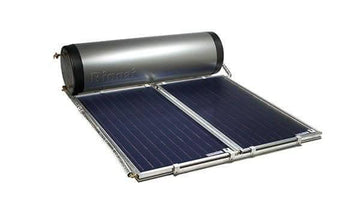
Best Solar Hot Water Systems for Brisbane and Gold Coast Homes
Choosing the best solar hot water system is not just about picking the biggest tank or the best-known brand. The right system depends on your household size, roof space, sun exposure, boosting option, installation layout and how much hot water your home uses each day.
For Brisbane, Gold Coast and South East Queensland homes, solar hot water can still be a strong option when the site is suitable. Homes with good north-facing roof space, limited shading and regular daytime hot water demand are often the best fit. For homes with shaded roofs, difficult access or limited collector space, heat pump hot water systems may be a better alternative.
JR Gas & Water can help compare solar hot water systems, heat pump hot water systems, electric hot water systems and instant gas hot water systems based on the home, not just the product.
Quick answer
The best solar hot water system for most Brisbane and Gold Coast homes is usually a correctly sized twin-panel boosted system from a reputable brand such as Envirosun, Rheem or Rinnai. A 300L to 325L system is commonly suited to many medium and larger households, while smaller homes may be better suited to a smaller tank or an alternative such as a heat pump.
Solar hot water works best when the home has suitable roof space, good sun exposure and a practical installation path. If the roof is shaded, difficult to access or poorly oriented, a heat pump may deliver a better result with less roof work.
How we judged the best solar hot water systems
When comparing solar hot water systems, the main considerations are:
-
Tank capacity
-
Collector size and roof space requirements
-
Electric or gas boosting option
-
Brand support and parts availability
-
Installation practicality
-
Suitability for Brisbane and Gold Coast conditions
-
Long-term ownership value
-
Maintenance requirements
-
Household hot water demand
-
Whether a heat pump or gas system may be a better fit
A good solar hot water system should be matched to the home, not chosen from a brochure alone.
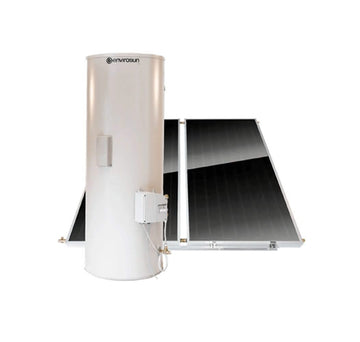
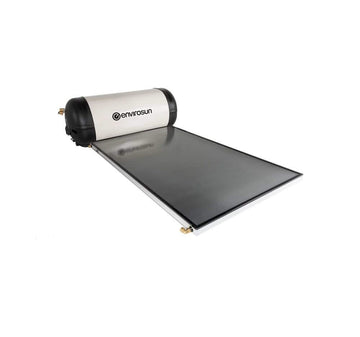
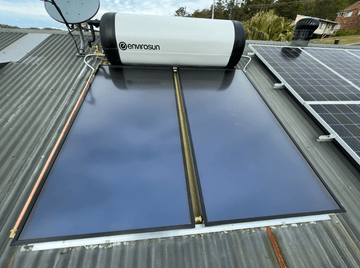
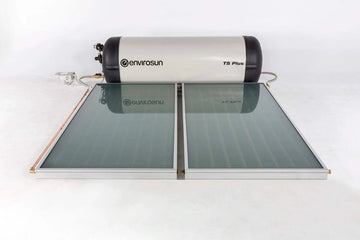
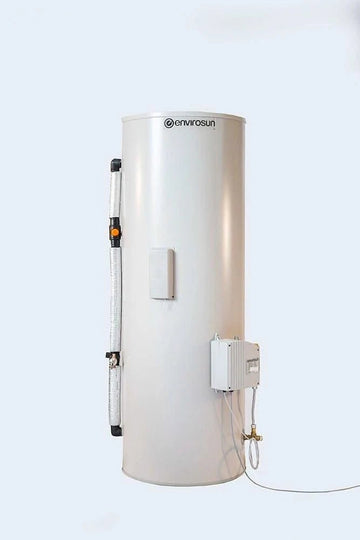
Best overall solar hot water option: Envirosun TS+ 300L Twin Panel Close-Coupled System
The Envirosun TS+ 300L twin panel close-coupled system is a practical option for households wanting a roof-mounted solar hot water setup with strong solar gain and electric boosting for backup.
Best suited to
-
Medium to larger households
-
Homes with suitable roof structure and access
-
Properties with good sun exposure
-
Customers wanting a practical solar hot water option without moving into premium pricing
-
Homes replacing an older electric storage hot water system
Why it stands out
The Envirosun TS+ style system combines a tank and collectors on the roof, which can make it a relatively straightforward option where the roof is suitable. The twin panel design helps improve solar collection, while the electric booster helps maintain hot water availability during poor weather or high usage periods.
For homes with good roof orientation and limited shading, this type of system can be a sensible solar choice.
Things to consider
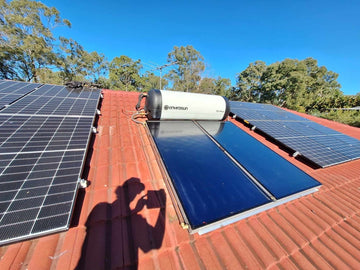
A close-coupled system places both the tank and collectors on the roof, so roof strength, access, pitch and visual impact need to be considered. It may not be ideal for every home, especially where roof access is difficult or the property has shading from trees, neighbouring buildings or complex rooflines.
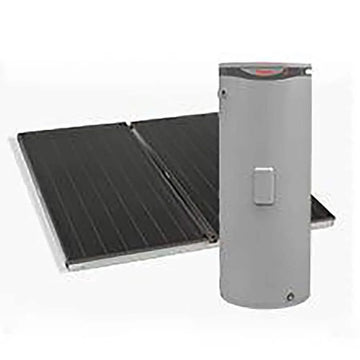
Best split system option: Rheem Loline 325L Twin Panel Split System
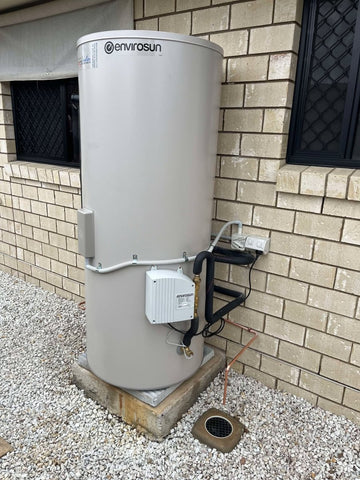
The Rheem Loline 325L twin panel split system is a strong option for households wanting roof collectors with the storage tank positioned at ground level.
Best suited to
-
Homes where a roof-mounted tank is not preferred
-
Medium to larger households
-
Properties needing higher hot water capacity
-
Customers wanting established brand support
-
Sites where ground-level tank access is easier for servicing
Why it stands out
A split solar hot water system keeps the collectors on the roof while the tank is installed at ground level. This can make servicing and future access easier compared with a close-coupled system.
For many Brisbane and Gold Coast homes, a split system can also be a neater option when the roofline, access or appearance of a roof-mounted tank is a concern.
Things to consider
Split systems are generally more complex than passive roof-mounted systems because they use pumps and controls to circulate water between the tank and collectors. This makes correct installation and system setup important.
Best value split system option: Rinnai Sunmaster 315L Twin Panel Split System
The Rinnai Sunmaster 315L twin panel split system is another dependable option for households wanting a ground-mounted tank and roof-mounted solar collectors.
Best suited to
-
Families needing a larger-capacity solar hot water system
-
Homes where a split installation is more practical
-
Customers wanting a known hot water brand
-
Properties where tank servicing access matters
-
Homes with suitable roof collector space
Why it stands out
The Rinnai Sunmaster range is commonly considered by homeowners looking for a practical solar hot water system with boosted backup. The split design can suit homes where the roof is suitable for collectors but not ideal for a roof-mounted storage tank.
Things to consider
Like other solar systems, performance depends heavily on roof orientation, shading, installation quality and household usage patterns. A good brand cannot overcome a poor site match, so the system should be selected after checking the home’s layout.
Quick comparison table
| System | Best suited to | Main advantage |
|---|---|---|
| Envirosun TS+ 300L Twin Panel Close-Coupled | Medium to larger homes with suitable roof access | Practical roof-mounted solar setup |
| Rheem Loline 325L Twin Panel Split System | Larger households wanting a ground-level tank | Strong capacity and service access |
| Rinnai Sunmaster 315L Twin Panel Split System | Families wanting a value-focused split solar option | Good balance of capacity and practicality |
Solar hot water system sizing guide
The right size depends on how many people live in the home, when hot water is used, how many bathrooms are in use and whether the system has enough boosting capacity.
As a general guide:
| Household size | Common tank size range | Notes |
|---|---|---|
| 1–2 people | 180L–250L | May suit smaller homes, units or low-use households |
| 3–4 people | 250L–315L | Common range for many family homes |
| 4–6 people | 300L–400L | Better suited to larger demand and multiple bathrooms |
| High-use homes | 400L+ or alternative setup | May need careful sizing, stronger boosting or another system type |
A larger tank is not always better. Oversizing can increase upfront cost and heat loss, while undersizing can leave the home relying too heavily on the booster.
Active vs passive solar hot water systems
| System type | How it works | Best suited to |
|---|---|---|
| Passive solar hot water | Uses natural thermosiphon movement instead of pumps | Simpler installations and suitable warm-climate homes |
| Active solar hot water | Uses pumps and controls to move water between collectors and tank | Split systems, larger homes and more flexible layouts |
Passive systems can be simpler because they have fewer moving parts. Active systems can offer more installation flexibility, especially where the tank needs to be installed at ground level.
For South East Queensland homes, both options can work well when the site is suitable.
Electric boosting vs gas boosting
Solar hot water systems usually need a booster so the home still has hot water during cloudy weather, heavy use or cooler periods.
Electric boosting
Electric boosting is common and straightforward. It uses an electric element to heat the tank when the solar collectors have not supplied enough heat.
This can be a practical option, but the running cost depends on electricity pricing, tariff setup and how often the booster is used.
Gas boosting
Gas boosting can suit some homes with an existing gas supply. It can provide strong backup heating when solar contribution is low.
Gas work should always be completed by a licensed gas fitter, and the system must be matched to the home’s gas supply, pipe sizing and installation requirements.
Solar PV and hot water
Some homes use rooftop solar power to help reduce the running cost of electric hot water boosting or to support a heat pump hot water system. This can be a good option, but the best setup depends on the home’s energy use, tariff, timing and available equipment.
Solar hot water vs heat pump hot water
Solar hot water and heat pump hot water are both popular alternatives to standard electric storage, but they suit different homes.
| Option | Best suited to | Key consideration |
|---|---|---|
| Solar hot water | Homes with good roof space and sun exposure | Needs suitable collectors and boosting |
| Heat pump hot water | Homes with limited roof space or strong solar PV setup | Needs suitable outdoor unit location and airflow |
| Electric storage | Budget replacements or simple like-for-like installs | Higher running costs in many homes |
| Instant gas hot water | Homes with suitable gas supply and high flow demand | Gas supply and installation requirements matter |
A heat pump can be a better option where the roof is shaded, the home has limited roof collector space, or the owner wants to avoid roof-mounted solar collectors. JR Gas & Water can help compare quiet heat pump systems, large family heat pumps and budget heat pump systems if solar hot water is not the best fit.
Brisbane and Gold Coast installation considerations
Solar hot water can work well in South East Queensland, but the installation details matter.
Common local considerations include:
-
North-facing or north-west-facing roof space
-
Shading from trees, neighbouring homes or second-storey sections
-
Roof pitch and roof access
-
Older roofs that may need closer inspection before installing a roof-mounted tank
-
Coastal corrosion risk near the Gold Coast
-
Storm exposure and roof mounting requirements
-
Long pipe runs between the tank and bathrooms
-
Townhouse or body corporate access requirements
-
Solar PV panels competing for the same roof space
-
Booster location and electrical or gas connection requirements
For older Brisbane homes, the roof structure and access path can be just as important as the hot water system itself. For coastal Gold Coast homes, corrosion exposure and equipment location should be considered carefully.
What can go wrong if the system is the wrong fit?
A solar hot water system can be a poor investment if it is not matched to the home.
Common issues include:
-
Not enough roof space for the collectors
-
Too much shading during key sunlight hours
-
Tank capacity too small for the household
-
Excessive booster use due to poor solar gain
-
Difficult servicing access
-
Poor tank or collector location
-
Long pipe runs causing heat loss and delays
-
Choosing solar when a heat pump would suit the site better
This is why photos, existing system details, roof layout and household usage are important before choosing a replacement.
What to check before ordering a solar hot water system
Before choosing a solar hot water system, check:
-
How many people live in the home
-
Number of bathrooms and showers
-
Whether hot water demand is morning-heavy, evening-heavy or both
-
Existing system size, location and energy source
-
Available roof space
-
Roof orientation and shading
-
Whether the home has solar PV panels
-
Whether the booster will be electric or gas
-
Access for installation and future servicing
-
Whether a heat pump may be more practical
Do not remove covers, modify valves, alter wiring or work on gas components yourself. Electrical work should be completed by a licensed electrician, and gas work should be completed by a licensed gas fitter.
Cost factors
The cost of a solar hot water system can vary depending on:
-
System brand and model
-
Tank capacity
-
Number and type of collectors
-
Close-coupled or split system design
-
Electric or gas boosting
-
Roof access and height
-
Pipework requirements
-
Existing system removal requirements
-
Electrical or gas compliance requirements
-
Whether additional valves or upgrades are needed
-
Site access across Brisbane, Gold Coast or nearby SEQ areas
Rebates and incentives can change, so they should be checked at the time of quoting rather than assumed. The final value of solar hot water depends on the home’s usage, installation cost, energy prices and how often the booster is needed.
What JR Gas & Water can help with
JR Gas & Water can help with:
-
Solar hot water replacement advice
-
Comparing solar hot water and heat pump options
-
Checking whether your roof layout is suitable
-
Matching tank size to household demand
-
Supplying and installing suitable hot water systems
-
Electric, heat pump, gas and solar hot water comparisons
-
Hot water repairs and replacement recommendations
-
Practical advice from photos and model details
Related JR Gas & Water services
FAQs
Is solar hot water still worth it in Brisbane?
Solar hot water can still be worth it in Brisbane when the home has suitable roof space, good sun exposure and the right household demand. It is usually strongest where the collectors can be installed with minimal shading and the tank size is matched correctly.
Is solar hot water better than a heat pump?
Not always. Solar hot water can be a good choice for homes with strong roof exposure, while heat pumps can be better for homes with limited roof space, shaded roofs or existing solar PV. The right choice depends on the site, not just the system type.
What size solar hot water system do I need for a family of four?
Many families of four look at systems around 300L to 325L, but the right size depends on shower habits, bathroom count, boosting setup and peak hot water use. A high-use family may need more capacity, while a lower-use household may not.
Do solar hot water systems work on cloudy days?
Solar hot water systems can still collect some heat in cloudy conditions, but performance is reduced. That is why most systems include an electric or gas booster to help maintain hot water when solar gain is not enough.
Can I replace an electric hot water system with solar hot water?
In many cases, yes, but the roof, pipework, electrical setup, tank location and access need to be checked. A heat pump may also be worth comparing if the home has limited roof space or already has solar PV.
Is a close-coupled or split solar hot water system better?
A close-coupled system can be simpler where the roof is suitable for both tank and collectors. A split system may be better when you want the tank at ground level or roof-mounted tank access is not practical. The best choice depends on the roof and installation layout.
How often should a solar hot water system be serviced?
Many solar hot water systems benefit from periodic servicing to check valves, the booster, the tank, collectors and general operation. The service interval can vary by manufacturer, water quality and site conditions, so the system’s documentation should be followed.
Can JR Gas & Water help if I am not sure whether solar is right for my home?
Yes. JR Gas & Water can help compare solar, heat pump, electric and gas hot water options using photos, household details and existing system information. This helps narrow down the most practical options before ordering.
Need help choosing the right solar hot water system?
If your current hot water system is leaking, unreliable, expensive to run or due for replacement, JR Gas & Water can help compare suitable options for your home.
Browse solar hot water systems, compare heat pump hot water systems, or send photos and model details through for a practical recommendation.
Plumbing & Gas Fitting Across South East Queensland
Looking for a local plumber? JR Gas & Water provides plumbing and gas fitting services throughout Greater Brisbane, Logan, Ipswich, Moreton Bay, Redlands and the Gold Coast.
View all plumbing & gas fitting service areas