Hard Water, Scale Reduction & Water Softening Systems
Hard water and scale treatment is designed for homes experiencing mineral
build-up, white spotting, scale around taps and shower screens or recurring
deposits in kettles, hot water equipment and other water-using appliances.
The correct treatment depends on whether you want to manage scale formation
or actually reduce the hardness minerals in the water.
JR Gas & Water supplies and installs hard water treatment, anti-scale
filtration and water softening systems throughout Greater Brisbane, the Gold
Coast, Logan, Ipswich, Redlands, Moreton Bay, Scenic Rim and surrounding
South East Queensland areas.
Our range includes dedicated water softeners, whole-house filtration with
scale-control treatment, covered and enclosed filtration systems and reverse
osmosis systems for customers wanting lower dissolved-mineral levels at a
dedicated drinking-water outlet.
A water softener and an anti-scale filter are not the same thing. A true
softener is designed to reduce hardness minerals such as calcium and magnesium,
while scale-control systems can be designed to help manage mineral scale
without necessarily removing those hardness minerals from the water.
JR Installer Verdict:
First determine whether the property actually has hard water and whether the
goal is true softening or simply better scale management. Those are different
treatment objectives and should not be sold as though they are the same thing.
What Is Hard Water?
Water hardness is caused primarily by dissolved calcium and magnesium ions.
Hardness is commonly expressed as milligrams per litre of calcium carbonate
equivalent, written as mg/L CaCO₃.
Hard water is not simply water containing sediment. The hardness minerals are
dissolved in the water, which means a normal sediment cartridge should not be
expected to remove them.
Calcium
Calcium is one of the main dissolved minerals contributing to water hardness
and mineral scale.
Magnesium
Magnesium is the other major contributor used when calculating total water
hardness.
Scale Formation
Under suitable conditions, dissolved hardness minerals can contribute to
mineral deposits on fixtures, pipework and heated surfaces.
JR Installer Verdict:
A sediment filter catches particles. Hardness minerals are dissolved. If the
problem is true hardness, selecting a finer sediment cartridge is not the same
thing as treating the hardness.
How Hard Is Hard Water?
The Australian Drinking Water Guidelines classify hardness by total hardness
expressed as calcium carbonate. The guideline is primarily based on aesthetic
and scaling considerations rather than a health-based maximum.
| Total Hardness as CaCO₃ |
Australian Guideline Description |
Practical Meaning |
| Below 60 mg/L |
Soft, but possibly corrosive |
Low hardness; other water chemistry still affects corrosion |
| 60–200 mg/L |
Good quality |
Generally lower scale concern |
| 200–500 mg/L |
Increasing scaling problems |
Scale management or softening may be worth investigating |
| Above 500 mg/L |
Severe scaling |
Dedicated hardness treatment may warrant stronger consideration |
Australian reference:
The Australian Drinking Water Guidelines state that total hardness above
200 mg/L as CaCO₃ can contribute to undesirable scale in hot-water pipes and
fittings.
View NHMRC hardness guidance →
JR Installer Verdict:
Do not diagnose hard water from a few white marks alone. If a customer is
considering a dedicated softener, measuring actual water hardness gives a far
better basis for choosing the treatment system.
Common Signs of Hard Water & Scale
Hardness and scale can show up in several ways around a property. These signs
can justify further investigation, although they do not replace water testing
where the actual hardness level matters.
White Scale Around Taps
Mineral deposits can accumulate around aerators, tap bases and other areas
where water repeatedly evaporates.
Shower Screen Spotting
Dried water droplets can leave visible mineral marks on glass, tiles and
chrome surfaces.
Kettle Scale
Heating water can make mineral deposits particularly noticeable inside
kettles and other heated appliances.
Hot Water Scale
Elevated hardness can contribute to scaling of hot-water pipework, heating
surfaces and fittings.
Soap & Lather
Hard water generally requires more soap to produce the same lather compared
with softer water.
Recurring Mineral Deposits
Repeated scale after cleaning can be an indication that dissolved mineral
content deserves further investigation.
Scale Control vs Water Softener – What Is the Difference?
This is the most important distinction on a hard-water page. Scale-control
systems and true water softeners can both be sold for scale concerns, but
they do not necessarily treat the water in the same way.
| Feature |
Scale-Control / Anti-Scale System |
True Water Softener |
| Main objective |
Help manage scale formation |
Reduce water hardness |
| Removes calcium & magnesium? |
Not necessarily |
Designed to reduce hardness minerals |
| Water hardness test after treatment |
May still show hardness minerals |
Should show reduced hardness when operating correctly |
| Typical whole-house use |
Often combined with broader filtration |
Dedicated whole-property hardness treatment |
| Salt / regeneration |
Depends on technology; many do not use salt |
Conventional ion-exchange softeners commonly regenerate |
| Drain requirement |
Depends on system |
Regenerating softeners normally require drainage |
| Best suited to |
Scale-conscious treatment without necessarily removing hardness |
Homes wanting measurable hardness reduction |
JR Installer Verdict:
If the customer specifically wants softer water, use a system designed to
reduce hardness. If they mainly want help managing scale while retaining a
broader whole-house filtration setup, an anti-scale system may be the more
appropriate category.
How Does a Water Softener Work?
Traditional residential water softeners commonly use ion-exchange resin to
reduce calcium and magnesium hardness ions in the water.
As the resin reaches its treatment capacity, a regenerating softener uses its
regeneration cycle to restore the resin so it can continue treating incoming
water.
1. Hard Water Enters
Incoming whole-house water passes through the softener's treatment vessel.
2. Ion Exchange Occurs
The treatment resin exchanges hardness ions such as calcium and magnesium
according to the design of the softener.
3. Softened Water Leaves
Water with reduced hardness continues into the household plumbing.
4. Resin Capacity Is Used
As more hard water is treated, the resin progressively reaches its treatment
capacity.
5. Regeneration
The softener regenerates according to its control system so the treatment
media can continue operating.
6. Ongoing Servicing
Salt or other consumables, valves, controls and system performance need to be
maintained according to the equipment used.
How Does Anti-Scale Water Treatment Work?
Anti-scale systems use treatment technologies designed to help manage how
hardness minerals behave or how readily scale deposits form. The exact method
depends on the selected product.
Unlike a true softener, scale-control treatment should not automatically be
described as removing calcium and magnesium from the water.
Cartridge-Based Scale Treatment
Some whole-house filters use specialist cartridges as one stage within a
larger filtration system.
Conditioning Technologies
Some systems are designed to alter the conditions under which scale forms
rather than physically removing all hardness minerals.
Combined Whole-House Systems
Scale-control treatment can be combined with sediment and carbon filtration
where broader household filtration is also wanted.
JR Installer Verdict:
"Anti-scale" and "water softener" should never be used interchangeably unless
the actual treatment technology supports that claim. The customer should know
whether the system reduces hardness or manages scale.
Types of Hard Water & Scale Treatment Systems
Dedicated Water Softeners
Whole-house softeners are designed specifically for properties wanting
measurable reduction of hardness minerals throughout the water supply.
Anti-Scale Whole House Filters
These systems combine conventional whole-home filtration with an additional
scale-control treatment stage.
Compare whole-house filtration →
Enclosed Scale-Control Systems
Covered and cabinet-style systems can combine whole-house filtration and
scale-conscious treatment in a cleaner external installation.
Compare enclosed filtration systems →
Reverse Osmosis Drinking Water
RO can reduce many dissolved minerals at a dedicated drinking-water outlet
but is normally a point-of-use treatment rather than the main whole-house
hard-water solution.
Compare reverse osmosis →
Whole House + Softener
Where both broader filtration and measurable hardness reduction are wanted,
a softener can form part of a larger whole-home water-treatment setup.
Whole House + Kitchen RO
Some homes combine whole-house scale or hardness treatment with reverse
osmosis at the kitchen for more specialised drinking-water treatment.
Compare Hard Water & Scale Treatment Options
| Treatment |
Main Purpose |
Reduces Hardness Minerals? |
Typical Application |
| Water Softener |
Reduce calcium and magnesium hardness |
Yes, when correctly selected and operating |
Whole house |
| Anti-Scale Treatment |
Help manage scale formation |
Not necessarily |
Whole house |
| Sediment Filtration |
Remove suspended particles |
No |
Whole house / drinking water |
| Carbon Filtration |
General filtration such as chlorine, taste and odour reduction |
Not conventional hardness removal |
Whole house / drinking water |
| Reverse Osmosis |
Reduce many dissolved substances |
Can reduce dissolved calcium and magnesium |
Primarily drinking water |
| Standard Under-Sink Filter |
Point-of-use drinking-water filtration |
Depends on specialist treatment used |
Kitchen |
JR Installer Verdict:
Do not expect sediment or standard carbon filtration to soften water. Hardness
treatment requires technology designed for dissolved mineral treatment or
scale management.
Water Softener vs Reverse Osmosis
Water softeners and reverse-osmosis systems can both reduce mineral content,
but they are designed around completely different water volumes and treatment
goals.
| Feature |
Water Softener |
Reverse Osmosis |
| Main application |
Whole-house hardness treatment |
Dedicated drinking-water treatment |
| Typical flow |
High household flow |
Lower point-of-use flow |
| Calcium & magnesium |
Designed to reduce hardness minerals |
RO membrane can reduce dissolved mineral ions |
| Broader dissolved substances |
Not its primary purpose |
One of RO's main treatment strengths |
| Reject / regeneration water |
Regenerating softeners use water during regeneration |
RO creates a reject-water stream |
| Best suited to |
Scale and hard-water concerns throughout the property |
Purified drinking and cooking water |
JR Installer Verdict:
RO is not normally the answer to whole-house hard water. It makes far more
sense at a drinking-water outlet, while a dedicated softener or scale-control
system manages the much larger whole-house water volume.
Should You Test Your Water Hardness?
If the customer is considering a dedicated water softener, hardness testing is
one of the most useful measurements because it confirms the actual level of
calcium and magnesium hardness being treated.
Visible spotting can indicate a mineral issue, but it does not tell you the
hardness concentration by itself. Other water characteristics can also affect
deposits, corrosion and scale formation.
Hardness Test
Measures the concentration of hardness minerals, commonly reported as
mg/L CaCO₃.
TDS Test
TDS estimates overall dissolved ionic material but does not tell you how much
of that total is specifically calcium and magnesium hardness.
JR Installer Verdict:
TDS and hardness are not the same measurement. If we are sizing or justifying
a true water softener, hardness is the number that matters most.
Hard Water, Scale & Hot Water Systems
Scale can become particularly noticeable around hot-water equipment because
heating conditions can encourage mineral deposits to form on surfaces,
pipework and fittings.
The Australian Drinking Water Guidelines specifically identify undesirable
scale in hot-water pipes and fittings as one of the reasons for the
200 mg/L CaCO₃ hardness guideline.
Heating Surfaces
Mineral scale can accumulate on surfaces exposed to repeated heating where
water hardness is sufficiently high.
Valves & Fittings
Heavy scale can contribute to deposits around water-handling components,
depending on the water conditions and equipment.
Pipework
Long-term scale accumulation can contribute to undesirable deposits within
hot-water plumbing in sufficiently hard-water conditions.
JR Installer Verdict:
If scale is repeatedly appearing around hot-water equipment, test the water
before assuming the appliance itself is causing the problem.
Whole House Hard Water & Scale Treatment
Hardness and scale are generally whole-property concerns because the same
incoming water feeds bathrooms, kitchens, laundries, hot-water equipment and
appliances.
For that reason, a dedicated softener or scale-control system is normally
installed at the point of entry rather than beneath one kitchen sink.
Whole-House Water Softener
Designed for customers wanting measurable reduction of hardness minerals
before water is distributed through the home.
Whole-House Scale-Control Filter
Combines high-flow household filtration with scale-conscious treatment where
true softening is not the selected approach.
Compare whole-house filters →
JR Installer Verdict:
If scale appears throughout bathrooms, hot water and kitchen fixtures, treating
one kitchen tap will not address the broader property issue. Start at the
incoming whole-house supply.
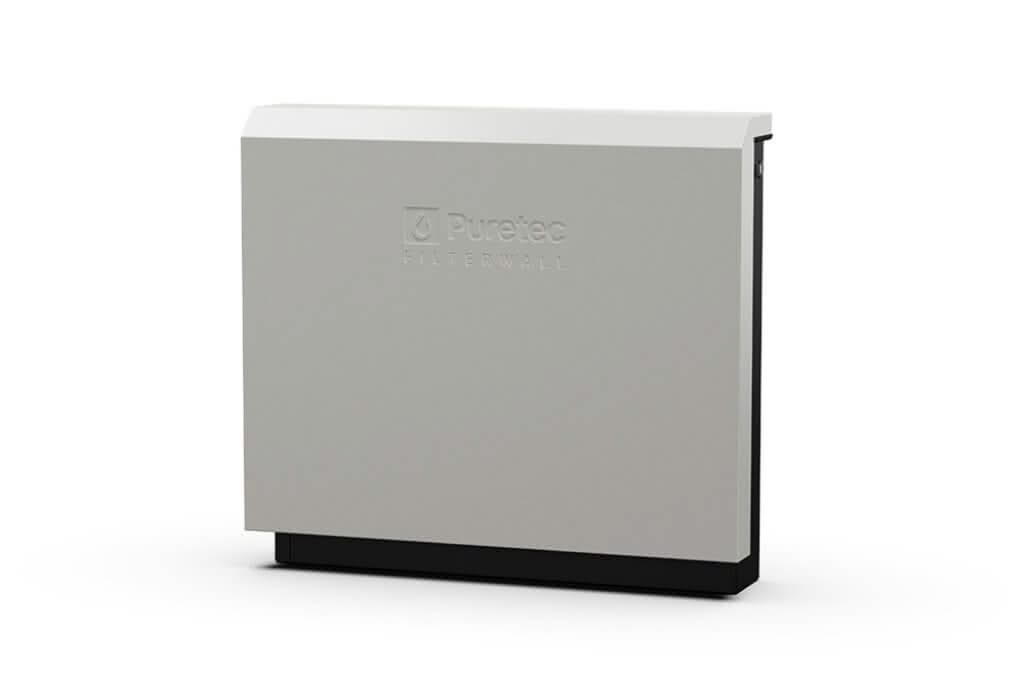
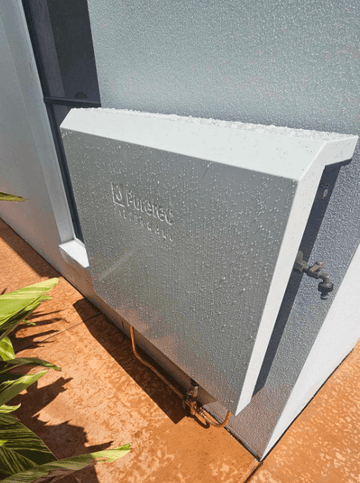
Enclosed Whole House Scale Filtration
Scale-control treatment can also be incorporated into covered or enclosed
whole-house filtration systems. These combine filtration equipment inside a
purpose-built cabinet for a cleaner external appearance.
The enclosure itself does not treat hardness or scale. The treatment
performance comes from the filtration and scale-control technology installed
inside the cabinet.
Compare covered & enclosed whole-house filtration →
JR Installer Verdict:
Choose the scale treatment first and the cabinet second. An enclosed system
still needs the correct media, flow capacity and servicing arrangement for the
property.
What Size Water Softener or Scale System Do I Need?
Sizing depends on the treatment technology. A whole-house softener needs enough
treatment capacity for the property's hardness level and water use, while a
scale-control filter also needs sufficient flow for the household.
Important Sizing Factors
- Measured water hardness.
- Number of occupants.
- Average water consumption.
- Number of bathrooms.
- Peak simultaneous water flow.
- Incoming pipe size.
- Available pressure.
- Softener resin or treatment capacity.
- Regeneration settings where applicable.
- Scale-control cartridge capacity.
- Available installation space.
JR Installer Verdict:
For a softener, hardness level and water usage matter as much as flow. For a
whole-house scale filter, peak household flow is also critical. Do not size
either system from bedrooms alone.
Water Softener & Scale Filter Installation Brisbane & Gold Coast
JR Gas & Water supplies and installs water softeners, anti-scale filters
and whole-house scale-treatment systems throughout Brisbane, the Gold Coast
and surrounding South East Queensland areas.
1. Confirm the Water Concern
Determine whether the property needs true hardness reduction, scale control
or broader whole-house filtration.
2. Test Hardness Where Required
Measure the incoming water where actual hardness level is important to system
selection.
3. Select & Size the System
Match treatment capacity, household water use and peak flow to the property.
4. Confirm Installation Requirements
Check the incoming supply, drainage, electrical requirements, available space
and future servicing access.
5. Install & Connect
Install the treatment system, valves, pipework, drainage and other required
connections.
6. Commission the System
Test the installation, configure the equipment where required and confirm
correct household flow and operation.
What Does a Water Softener Installation Need?
A regenerating water softener can require more site planning than a basic
whole-house cartridge filter.
Drainage
Regeneration creates a discharge that needs to be connected and managed
according to the requirements of the selected system and installation.
Power
Some automatic softeners use powered control valves and therefore need an
appropriate electrical supply.
Space
Allow room for the treatment vessel, brine equipment where applicable,
pipework and future servicing.
Incoming Water Main
The softener needs to be positioned so the intended household supply passes
through the treatment system.
JR Installer Verdict:
A softener is more than a large filter housing. Drainage, controls,
regeneration and service access all need to be considered before choosing the
installation position.
How Much Does Hard Water & Scale Treatment Cost?
Cost varies significantly between a cartridge-based anti-scale system and a
dedicated automatic whole-house water softener.
JR Gas & Water displays current hard-water, softener and scale-treatment
products with installed pricing in the live range above so customers can
compare actual systems rather than relying on a generic price guide.
What Changes the Installed Price?
- Water softener versus scale-control filtration.
- Measured hardness level.
- Treatment capacity.
- Required household flow.
- Whole-house filtration stages.
- Open versus enclosed system.
- Existing incoming pipework.
- Drainage requirements.
- Electrical requirements.
- Installation location.
- Bypass and isolation requirements.
- Additional plumbing.
- Ongoing cartridge, media or salt requirements.
JR Installer Verdict:
Compare the result you are buying, not just the equipment price. A lower-cost
scale-control system and a true softener are not equivalent treatments, so
their prices should not be compared as though they perform the same job.
Water Softener & Scale Filter Maintenance
Maintenance depends on the treatment type. Cartridge-based scale systems use
consumable filter media, while regenerating softeners have different ongoing
service requirements.
Scale-Control Filters
Replacement cartridges or treatment media need servicing according to their
rated capacity, water use and manufacturer requirements.
Compare replacement cartridges →
Water Softeners
Ongoing servicing can include maintaining regeneration consumables, checking
control settings, inspecting valves and confirming the system continues to
reduce hardness correctly.
JR Installer Verdict:
The easiest way to know whether a true softener is still doing its job is not
to judge it by water flow alone. Hardness reduction can be measured before and
after the system.
What We Look for in Hard Water & Scale Treatment
Is the Water Actually Hard?
Before recommending a dedicated softener, actual water hardness is more useful
than assumptions based only on postcode or a few water spots.
Does the Customer Want Softening or Scale Control?
These are different outcomes. We want the treatment technology to match what
the homeowner expects it to achieve.
Can It Support Whole-House Flow?
A treatment system on the incoming supply should not become an unnecessary
restriction during normal household use.
What Is the Ongoing Service Requirement?
Cartridges, regeneration consumables and equipment servicing are part of the
real ownership cost.
Is There Suitable Drainage & Power?
A regenerating softener may have site requirements that a conventional
cartridge filter does not.
Is Additional Filtration Also Wanted?
Hardness treatment can be combined with sediment, carbon or dedicated
drinking-water filtration rather than expecting the softener to perform every
water-treatment function.
Common Hard Water & Scale Treatment Mistakes
Calling Every Scale Filter a Water Softener
A system that manages scale without removing hardness minerals should not be
presented as equivalent to true water softening.
Using TDS as a Hardness Test
TDS measures total dissolved ionic material. It does not tell you specifically
how much calcium and magnesium hardness is present.
Expecting a Sediment Filter to Remove Hardness
Hardness minerals are dissolved and pass through conventional sediment
filtration.
Choosing a Softener Without Testing
Where significant investment is involved, confirming hardness can prevent
buying treatment the property does not actually need.
Ignoring Household Flow
Whole-house treatment still needs to provide enough water for realistic
simultaneous fixture demand.
Forgetting Ongoing Maintenance
Cartridge replacement, regeneration and system servicing affect long-term
performance and ownership cost.
Hard Water Filters & Water Softeners Brisbane & Gold Coast
Hard Water Treatment Brisbane
JR Gas & Water supplies and installs water softeners, anti-scale filtration
and whole-house scale treatment throughout Greater Brisbane, Logan, Ipswich,
Redlands, Moreton Bay, Scenic Rim and surrounding areas.
We can compare the property's actual water concern, hardness level where
tested, household flow and installation requirements before selecting the
treatment system.
Hard Water Treatment Gold Coast
JR Gas & Water installs hard-water and scale-treatment systems throughout
the Gold Coast, including dedicated water softeners, whole-house anti-scale
filtration and premium enclosed systems.
The right setup depends on whether measurable hardness reduction or scale
management is the required result.
Hard Water, Scale & Water Softener FAQs
What is hard water?
Hard water contains elevated levels of dissolved hardness minerals,
particularly calcium and magnesium. Hardness is commonly measured as
milligrams per litre of calcium carbonate equivalent.
What causes hard water?
Water hardness is primarily caused by dissolved calcium and magnesium picked
up as water interacts with mineral-containing soils, rock and groundwater
sources.
What causes white scale on taps and shower screens?
Hardness minerals can leave deposits after water evaporates and can contribute
to scale formation. White marks can be a sign worth investigating, but water
testing provides a better measure of actual hardness.
What hardness level causes scale?
The Australian Drinking Water Guidelines classify 60–200 mg/L as generally
good quality, 200–500 mg/L as having increasing scaling problems and more than
500 mg/L as severe scaling. Actual scale formation is also influenced by other
water chemistry and temperature.
Is hard water unsafe to drink?
The Australian Drinking Water Guidelines do not set a health-based maximum for
hardness. The 200 mg/L guideline is primarily related to aesthetic quality and
undesirable scale in pipes and fittings rather than being a toxicity limit.
What is the difference between a scale filter and a water softener?
A true water softener is designed to reduce calcium and magnesium hardness.
A scale-control system may instead help manage how mineral scale forms without
necessarily removing those minerals from the water.
Does an anti-scale filter soften water?
Not necessarily. Some anti-scale technologies are designed to manage scale
rather than reduce the measured hardness level. Check the treatment method and
performance of the specific system.
How does a water softener work?
Traditional residential softeners commonly use ion-exchange resin to reduce
calcium and magnesium hardness ions. The resin is periodically regenerated so
it can continue treating incoming water.
Does a sediment filter remove hard water?
No. Conventional sediment filtration captures suspended particles. Calcium
and magnesium hardness are dissolved in the water and require different
treatment.
Does carbon filtration soften water?
Standard activated-carbon filtration is not conventional water softening.
Carbon is used for other treatment functions and should not automatically be
expected to reduce calcium and magnesium hardness.
Does reverse osmosis reduce hard water minerals?
Reverse osmosis can reduce dissolved calcium and magnesium, but residential RO
is normally used for dedicated drinking-water treatment rather than as the
main whole-house water-softening system.
Is TDS the same as water hardness?
No. TDS estimates the total concentration of dissolved ionic material, while
hardness specifically relates mainly to calcium and magnesium. Water can have
the same TDS reading with different hardness levels.
Should I test my water before buying a softener?
If you are considering a dedicated water softener, testing actual hardness is
a useful way to confirm the problem and help select an appropriate treatment
capacity.
Can hard water damage a hot water system?
Elevated hardness can contribute to scale deposits in hot-water pipes,
fittings and heating equipment. The Australian Drinking Water Guidelines use
scale in hot-water systems as one reason for their hardness guideline.
Do water softeners need a drain?
Regenerating softeners normally produce water during regeneration that needs
an appropriate drainage arrangement. Installation requirements depend on the
specific system.
Do water softeners need electricity?
Some automatic softeners use electrically powered control valves and require
a suitable power supply. Check the requirements of the specific system.
Can I combine a water softener with a water filter?
Yes. Hardness treatment can be combined with sediment, carbon and other
whole-house filtration where the homeowner wants both water softening and
broader filtration.
Can I use a softener and reverse osmosis together?
Yes. A whole-house softener can reduce hardness throughout the property while
a separate reverse-osmosis system provides more specialised treatment at the
kitchen drinking-water outlet.
Do you install water softeners in Brisbane and Gold Coast?
Yes. JR Gas & Water supplies and installs water softeners, whole-house
anti-scale filters and scale-treatment systems throughout Greater Brisbane,
the Gold Coast, Logan, Ipswich, Redlands, Moreton Bay, Scenic Rim and
surrounding South East Queensland areas.
Compare Hard Water & Scale Filtration Options
Hardness treatment can be used alone or combined with broader household and
drinking-water filtration. Compare the related filtration categories below.
Choose the Right Hard Water & Scale Treatment System
Compare water softeners, anti-scale filtration and whole-house scale-treatment
systems with current products and installed pricing above. If you are unsure
whether your property needs true water softening, scale control or a combined
whole-house filtration system, book an onsite quote inspection and we can
review the water concern, plumbing, flow and installation requirements before
you choose.