Reverse Osmosis Water Filtration: What It Is and When It Makes Sense
Reverse osmosis water filtration is one of the most advanced ways to filter drinking water at home. It is designed to reduce very fine dissolved contaminants that basic sediment or carbon filters may not target as effectively.
For Brisbane, Gold Coast and South East Queensland homes, reverse osmosis can be a strong option for households that want a dedicated drinking water system under the kitchen sink, especially where taste, odour, dissolved solids or extra filtration performance are priorities.
That said, reverse osmosis is not the right fit for every home. It can remove beneficial minerals as well as unwanted contaminants, it needs regular maintenance, and it is usually best used for drinking and cooking water rather than every tap in the house.
JR Gas & Water can help customers compare suitable water filters, including under-sink drinking water options, whole-home filtration and practical plumbing advice for Brisbane, the Gold Coast and nearby South East Queensland areas.
Quick Answer
Reverse osmosis is a water filtration process that pushes water through a fine membrane to reduce dissolved salts, metals, fluoride, nitrates, sediment, chlorine by-products and other very small contaminants, depending on the system design and filter stages.
It is best suited to households that want high-level drinking water filtration from a dedicated tap, usually at the kitchen sink. Before choosing an RO system, consider your water quality, household drinking water use, available under-sink space, maintenance requirements, filter replacement costs, wastewater ratio and whether you want remineralisation for taste.
JR Gas & Water can help compare suitable options through its water filter range and plumbing support.
What Is Reverse Osmosis?
Reverse osmosis, often called RO, is a filtration process that uses pressure to push water through a semi-permeable membrane.
The membrane is designed to allow water molecules through while reducing many dissolved particles and contaminants. Most residential RO systems also use pre-filters and post-filters to protect the membrane and improve water taste.
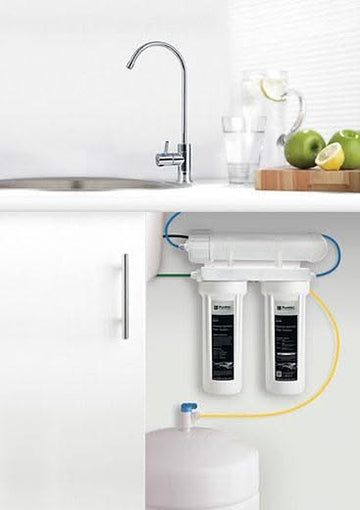
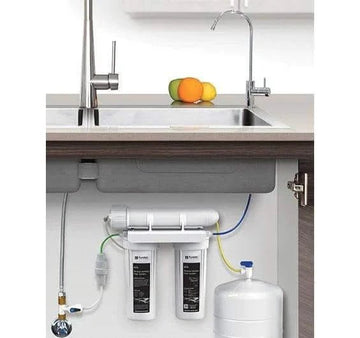
A typical reverse osmosis system may include:
Sediment pre-filter
Carbon pre-filter
Reverse osmosis membrane
Storage tank or tankless delivery system
Post-carbon polishing filter
Optional remineralisation stage
Optional UV stage for specific water sources
The result is filtered drinking water from a separate tap, usually installed at the kitchen sink.
What Does Reverse Osmosis Remove?
Reverse osmosis can reduce a broad range of contaminants, but performance depends on the specific system, membrane quality, filter stages, water pressure, maintenance and incoming water quality.
A well-maintained RO system may help reduce:
Dissolved salts
Heavy metals such as lead and arsenic
Fluoride
Nitrates
Sulfates
Sediment and fine particles
Some pesticides and chemical residues
Chlorine by-products when paired with carbon filtration
Total dissolved solids
Some bacteria and viruses, depending on system design and additional treatment stages
RO should not be treated as a one-size-fits-all solution without checking the water source. Town water, rainwater, bore water and tank water can all need different filtration approaches.
For households unsure what system suits them, JR Gas & Water can help compare water filters based on the property, water source and intended use.
How Reverse Osmosis Works
Most residential RO systems use multiple stages.
1. Sediment Pre-Filtration
The sediment filter helps remove particles such as dirt, rust, sand and fine debris before water reaches the membrane.
This protects the RO membrane and helps extend system life.
2. Carbon Pre-Filtration
The carbon filter helps reduce chlorine, taste and odour. This stage is important because chlorine can damage some RO membranes over time.
Carbon filtration also improves the taste of the final drinking water.
3. RO Membrane Filtration
This is the main filtration stage.
Water is pushed through the RO membrane, which reduces many dissolved solids and microscopic contaminants. The filtered water goes to the drinking water outlet, while rejected contaminants are flushed away through a drain line.
4. Post-Filtration
Many systems include a final carbon polishing filter after the storage tank or membrane. This helps improve taste before the water reaches the dedicated tap.
5. Optional Remineralisation
Because RO filtration can reduce minerals as well as contaminants, some systems include a remineralisation cartridge.
This can improve taste and add selected minerals back into the drinking water.
Benefits of Reverse Osmosis Water Filtration
Reverse osmosis is popular because it offers a high level of drinking water filtration from a compact under-sink system.
Key benefits can include:
Cleaner-tasting drinking water
Reduced total dissolved solids
Extra filtration beyond basic carbon filters
Dedicated filtered water tap
Useful option for cooking and kettle water
Reduced reliance on bottled water
Can improve taste where water has noticeable mineral or chemical flavour
Optional remineralisation for better taste balance
Suitable for households wanting a premium drinking water option
For many families, the main appeal is simple: better-tasting water available directly from the kitchen sink.
Potential Downsides of Reverse Osmosis
Reverse osmosis is effective, but it is not perfect for every home.
Things to consider include:
RO systems need regular filter changes
The membrane needs periodic replacement
Some systems produce wastewater during filtration
RO can reduce beneficial minerals
Water flow can be slower than standard tap water
A storage tank may take up under-sink space
Installation may require plumbing modifications
Not every system suits every water source
Poor maintenance can reduce filtration performance
This is why it is important to choose a system based on the home, not just the claim on the box.
Under-Sink Reverse Osmosis Systems
Under-sink RO systems are the most common option for residential drinking water.
They usually sit inside the kitchen cabinet and feed a dedicated filtered water tap.
Best Suited To
Under-sink RO systems may suit:
Families wanting filtered drinking water
Homes wanting better-tasting tap water
Customers wanting a dedicated kitchen drinking tap
Households reducing bottled water use
Properties with enough under-sink space
Customers wanting higher filtration than basic carbon systems
Things to Check
Before choosing an under-sink RO system, check:
Available cabinet space
Water pressure
Drain connection access
Filter replacement access
Dedicated tap position
Storage tank space if required
Whether remineralisation is included
Ongoing filter cost and availability
JR Gas & Water’s water filter collection can help customers compare practical residential filtration options.
Countertop Reverse Osmosis Systems
Countertop RO systems are often marketed as portable options. They can suit renters or small households where permanent plumbing changes are not preferred.
However, they may have limitations compared with a properly installed under-sink system.
Pros
Portable
Less invasive than under-sink installation
Can suit renters
No major cabinet space required
Limitations
Can take up bench space
May have smaller capacity
May be slower
May need manual filling depending on design
May not suit larger families
Can look less tidy than an installed system
For homeowners, an installed under-sink system is usually the cleaner long-term option.
Whole-House Reverse Osmosis Systems
Whole-house reverse osmosis is less common for normal town water homes. It is usually considered for specific water quality problems, rural properties, bore water, high dissolved solids or specialist applications.
Most homes do not need reverse osmosis for every tap.
Whole-home RO can involve higher cost, more maintenance, storage requirements, pressure considerations and water treatment design. It should be properly assessed before purchase.
For many Brisbane and Gold Coast homes, a combination of whole-home filtration and a dedicated drinking water system may be more practical than whole-house RO.
JR Gas & Water can help customers compare broader water filter options if they want filtered water for more than just drinking.
Reverse Osmosis vs Other Water Filtration Options
Different filters solve different problems. Reverse osmosis is not automatically better for every household.
| Filtration Type | What It Is Best For | Main Limitation |
|---|---|---|
| Sediment filtration | Dirt, rust, sand and particles | Does not target dissolved contaminants |
| Carbon filtration | Taste, odour, chlorine and some chemicals | Does not reduce dissolved salts like RO |
| Reverse osmosis | High-level drinking water filtration | Needs maintenance and can remove minerals |
| UV treatment | Microbial treatment for certain water sources | Does not remove sediment or dissolved solids |
| Whole-home filtration | Filtering water before it enters the home | System choice depends on water source and goals |
| Water softening | Hardness management | Not the same as drinking water filtration |
For town water homes, carbon and sediment filtration may be enough for some households. For customers wanting a higher level of drinking water filtration, reverse osmosis may be worth considering.
Remineralisation: Do You Need It?
Reverse osmosis can make water taste very clean, but some people find it tastes flat because minerals have been reduced.
A remineralisation cartridge can help improve taste by adding selected minerals back into the filtered water.
Remineralisation May Suit You If
You prefer a more natural mineral taste
You find standard RO water too flat
You want pH-balanced drinking water
You are using RO as your main drinking water source
You want a more premium under-sink setup
It is not essential for every system, but it is worth considering when comparing options.
UV Treatment: When It May Be Useful
UV treatment is sometimes added to water filtration systems where microbial contamination is a concern.
It may be relevant for:
Rainwater tanks
Bore water
Rural properties
Water sources outside normal treated town supply
Homes with specific water quality concerns
UV does not remove sediment, chemicals or dissolved solids on its own. It is usually used as part of a broader filtration system.
For standard town water, UV may not be necessary unless there is a specific reason to include it.
What to Consider Before Buying an RO System
Before choosing reverse osmosis, think about the actual problem you want to solve.
Important buying factors include:
Water source
Water taste and odour concerns
Known water quality issues
Household drinking water use
Available under-sink space
Filter replacement frequency
Membrane replacement cost
Wastewater ratio
Water pressure
Dedicated tap location
Whether you want remineralisation
Whether you need UV
Whether you want drinking water only or whole-home filtration
A good filtration setup should match the home, not just the marketing claim.
Installation Considerations
Reverse osmosis systems are usually installed under the kitchen sink with a dedicated filtered water tap and drain connection.
Professional installation can help avoid problems such as leaks, poor tap placement, incorrect drain connection, low pressure, difficult filter access or cabinet space issues.
Installation considerations can include:
Under-sink cabinet space
Existing pipework condition
Isolation valve access
Sink or benchtop tap hole position
Drain connection point
Storage tank position
Filter access for maintenance
Water pressure suitability
Whether any old filtration system needs removal
If the installation is not straightforward, JR Gas & Water can help through Brisbane plumber services and practical quote support.
Reverse Osmosis Maintenance
RO systems need regular maintenance to keep working properly.
Typical maintenance may include:
Sediment filter replacement
Carbon filter replacement
Post-filter replacement
RO membrane replacement
Checking for leaks
Checking water flow
System sanitisation where required
Checking tank pressure on tank-style systems
Replacing remineralisation cartridges if fitted
Filter timing depends on the system, water quality and household use. Always follow the manufacturer’s maintenance schedule.
A poorly maintained RO system may produce slower flow, poorer taste and reduced filtration performance.
Is Reverse Osmosis Eco-Friendly?
Reverse osmosis can reduce reliance on bottled water, which is a major benefit for many households.
However, RO systems can also produce wastewater during filtration. The amount depends on the system design, water pressure and efficiency rating.
When comparing systems, look at:
Waste-to-filtered-water ratio
Filter life
Membrane life
Replacement cartridge cost
Whether the system suits your household size
Whether bottled water use will reduce
Whether the system is maintained properly
A well-selected and maintained RO system can be a practical long-term drinking water option for many households.
Local Brisbane and Gold Coast Water Filtration Considerations
Most Brisbane and Gold Coast homes are connected to treated town water, but many homeowners still want better-tasting drinking water, extra filtration or a dedicated kitchen water system.
Local considerations can include:
Taste and odour preferences
Older homes with ageing internal pipework
Renovated kitchens needing under-sink filter planning
Townhouses with limited cabinet space
Acreage homes using tank or bore water
Properties with pumps or pressure variations
Families wanting to reduce bottled water use
Homes wanting filtered water for cooking, coffee and kettles
Space limitations under modern kitchen sinks
For town water, RO may be a premium drinking water choice. For rainwater, bore water or rural properties, filtration should be selected carefully based on the water source.
What JR Gas & Water Can Help With
JR Gas & Water can help customers compare water filtration options for Brisbane, the Gold Coast and nearby South East Queensland homes.
Relevant support includes:
Water filters for under-sink, drinking water and home filtration options
Book a Brisbane plumber for plumbing support and filter installation advice
Service work pricing for common service and plumbing jobs
Request a quote when you need help choosing the right filtration setup
Water pumps for properties where filtration is part of a broader tank, pump or acreage water setup
FAQs About Reverse Osmosis Water Filtration
Is reverse osmosis water safe to drink?
Yes, reverse osmosis water is generally safe to drink when the system is correctly selected, installed and maintained. Some people prefer to add remineralisation because RO can reduce natural minerals as well as unwanted contaminants.
Does reverse osmosis remove fluoride?
Reverse osmosis can reduce fluoride, depending on the system, membrane condition and water quality. If fluoride reduction is a key reason for buying the system, choose a system designed and rated for that purpose.
Does reverse osmosis remove chlorine?
RO systems usually rely on carbon pre-filtration to reduce chlorine before water reaches the membrane. This helps protect the membrane and improve taste. The RO membrane itself is not the only filtration stage doing the work.
What are the downsides of reverse osmosis?
The main downsides are filter maintenance, membrane replacement, slower flow on some systems, wastewater production and the removal of minerals from drinking water. A remineralisation stage can help improve taste.
Is reverse osmosis better than a carbon filter?
Reverse osmosis offers more advanced filtration for dissolved solids and very fine contaminants. Carbon filters are excellent for improving taste and reducing chlorine, but they do not target dissolved salts in the same way. The better choice depends on your water quality goals.
Do I need reverse osmosis for Brisbane tap water?
Not every Brisbane home needs RO, but some households choose it for taste, drinking water quality preferences or extra filtration. If you mainly want better taste and odour, a carbon-based system may be enough. If you want higher-level drinking water filtration, RO may be worth considering.
How often do RO filters need replacing?
Replacement timing depends on the system and household use. Sediment and carbon filters are commonly replaced more often than the RO membrane. The membrane may last longer, but it still needs replacement according to the manufacturer’s schedule.
Can JR Gas & Water install reverse osmosis systems?
JR Gas & Water can help with water filtration advice, plumbing support and suitable installation pathways across Brisbane, the Gold Coast and nearby South East Queensland areas. Customers can compare water filters or use the quote request page to send details.
Final Thoughts
Reverse osmosis is a strong option for households that want high-level drinking water filtration from a dedicated kitchen tap. It can reduce many dissolved contaminants that basic filters may not target, and it can improve taste for customers who want cleaner drinking and cooking water.
The best system depends on your water source, kitchen layout, maintenance expectations, household use and whether you want extras such as remineralisation or UV treatment.
Need help choosing a water filtration system?
JR Gas & Water can help compare suitable water filters, arrange plumbing support through the Brisbane plumber service, or review photos and details through the quote request page.




Plumbing & Gas Fitting Across South East Queensland
Looking for a local plumber? JR Gas & Water provides plumbing and gas fitting services throughout Greater Brisbane, Logan, Ipswich, Moreton Bay, Redlands and the Gold Coast.
View all plumbing & gas fitting service areas