

Whether you're planning a project, comparing options, or need a plumber today, our licensed team is here to help. Choose the option that best suits your situation.
Gas vs Electric Instant Hot Water: Which Is Best for Your Home?
Gas and electric instant hot water systems both heat water on demand, but they are not equal in every home. The best choice depends on your energy supply, household size, number of bathrooms, electrical capacity, gas availability, running cost expectations and installation requirements.
For most full-home instant hot water installations, gas continuous flow is usually the more practical option when natural gas or a correctly sized LPG supply is available. Electric instant hot water can work well for smaller point-of-use applications, such as a single sink or low-demand area, but whole-home electric tankless systems often need significant electrical capacity.
JR Gas & Water can help compare instant gas hot water systems, electric hot water systems, heat pump hot water systems and solar hot water systems based on your home, not just the product category.
Quick answer
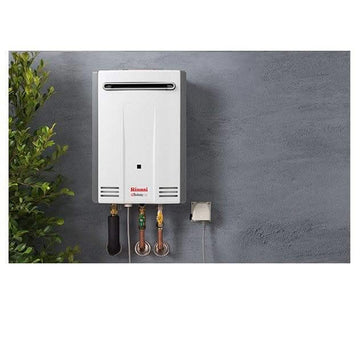
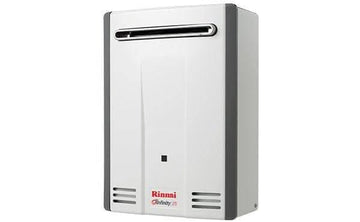
Gas instant hot water is usually the better choice for whole-home hot water if your property has a suitable natural gas connection or correctly designed LPG setup. It can deliver strong flow rates, compact installation and continuous hot water within the unit’s rated capacity.
Electric instant hot water is usually better suited to small point-of-use needs, such as a single basin, office sink, granny flat kitchenette or remote fixture. For whole-home use, electric tankless systems may need major electrical capacity and can be expensive or impractical to install in many existing homes.
If your home has no gas and you want efficient electric hot water, a heat pump hot water system may be a better option than whole-home electric instant hot water.
What is an instant hot water system?
An instant hot water system heats water only when a tap or shower is turned on. Unlike a storage hot water system, it does not keep a full tank of water hot throughout the day.
Instant systems are also commonly called:
-
Continuous flow hot water systems
-
Instantaneous hot water systems
-
Tankless hot water systems
-
Instant gas hot water systems
There are two main types:
-
Gas continuous flow hot water systems
-
Electric tankless hot water systems
Both can be compact, but they suit different homes.
Gas continuous flow hot water
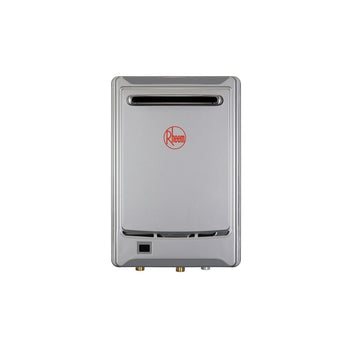
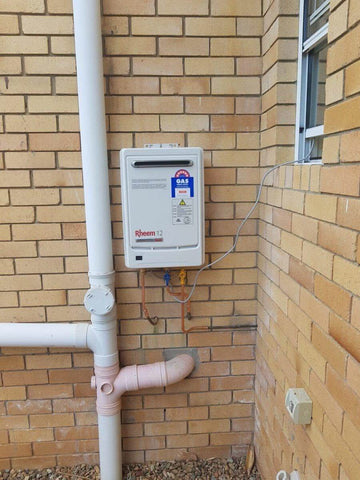
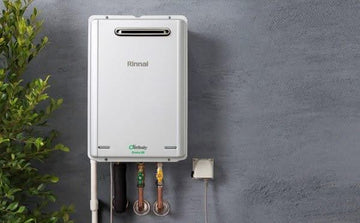
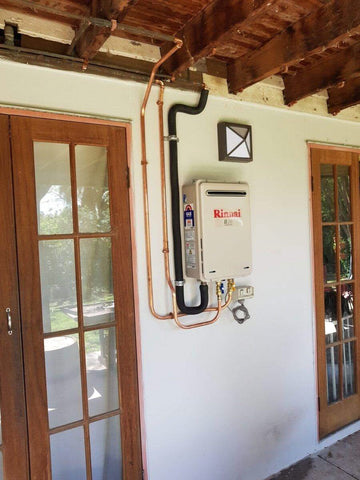
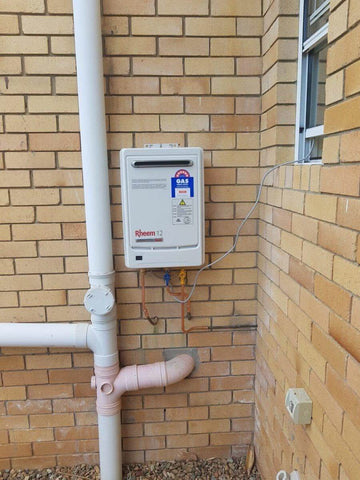
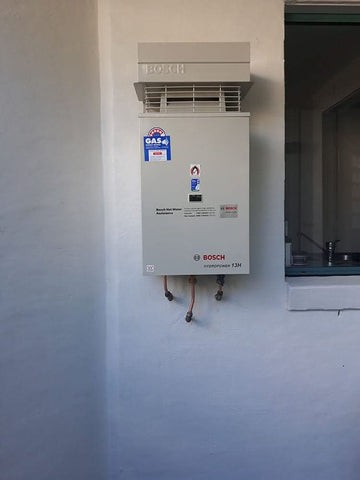
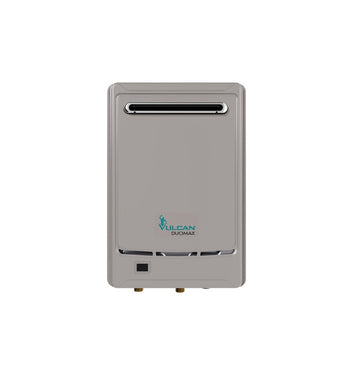
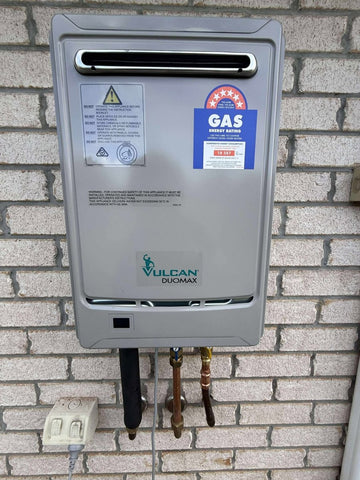
A gas continuous flow hot water system uses natural gas or LPG to heat water as it passes through the unit. When a hot tap opens, the burner activates, heats the water and continues operating while hot water is being used.
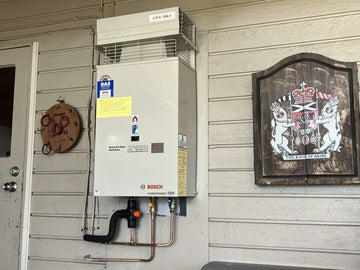
These systems are commonly installed externally on a wall, although the correct location depends on the model, ventilation requirements, clearances and site conditions.
Best suited to
-
Homes with natural gas connected
-
LPG homes with correctly sized bottles, regulators and pipework
-
Replacing older gas storage hot water systems
-
Households wanting a compact wall-mounted unit
-
Homes needing reliable whole-house hot water
-
Properties where a storage tank takes up too much space
What gas instant hot water does well
Gas continuous flow systems are popular because they can provide strong hot water performance without storing a tank of heated water.
Key advantages include:
-
Compact wall-mounted design
-
No stored hot water tank
-
Continuous hot water within the unit’s rated capacity
-
Strong option for many full-house installations
-
Natural gas and LPG model options
-
Good replacement choice for many older gas systems
-
Temperature controller options on selected models
Limitations to consider
Gas instant hot water is not suitable for every home.
Important considerations include:
-
A suitable gas supply is required
-
LPG systems need correctly sized bottles and regulators
-
Gas pipework may need upgrading
-
Some units require power for ignition and controls
-
Flow rate must be matched to household demand
-
Outdoor location and clearance requirements must be checked
Gas work should always be completed by a licensed gas fitter.
Electric instant hot water
Electric instant hot water systems use electric heating elements to heat water as it passes through the unit. They can be very compact and useful in the right application.
The main issue is power demand. Heating water instantly takes a lot of energy in a short period of time, so whole-home electric tankless systems may require electrical upgrades, larger circuits or three-phase power, depending on the unit and property.
Best suited to
-
Single sink applications
-
Small point-of-use hot water needs
-
Office basins or small amenities
-
Remote fixtures far from the main hot water unit
-
Homes where only a small hot water load is required
-
Specialist installations assessed by an electrician
What electric instant hot water does well
Electric tankless systems can be useful when the hot water demand is small and localised.
Advantages include:
-
Compact size
-
No gas supply required
-
Can reduce wait time at a distant fixture
-
Useful for small spaces
-
No stored tank of hot water
-
Simple in selected low-demand applications
Limitations to consider
Electric instant hot water can become less practical when used for a whole home.
Common limitations include:
-
High power demand
-
Electrical upgrades may be required
-
May not suit existing switchboards
-
May not suit off-peak electric tariff setups
-
Limited flow rate on smaller units
-
Can struggle with multiple outlets
-
May not be the best match for larger households
Electrical work should always be completed by a licensed electrician. Do not alter wiring, circuits or electrical components yourself.
Gas vs electric instant hot water comparison
| Feature | Gas continuous flow | Electric instant hot water |
|---|---|---|
| Best use | Whole-home hot water where gas is suitable | Small point-of-use hot water |
| Energy source | Natural gas or LPG | Electricity |
| Hot water output | Often better for full-house demand | Often limited unless major electrical capacity is available |
| Installation | Easier where gas is already available | May need electrical upgrades for larger units |
| Space required | Compact wall-mounted unit | Very compact unit |
| Running cost | Depends on gas type, tariffs and usage | Depends on electricity tariff and usage |
| LPG suitability | Suitable with correct bottle and regulator setup | Not applicable |
| Power requirement | Many models need power for controls | Requires electrical supply sized to the unit |
| Best household fit | Small to large homes, depending on sizing | Single outlets or small-load applications |
Which option is cheaper to install?
The cheaper option depends on what is already available at the property.
Gas continuous flow may be more cost-effective to install if:
-
Natural gas is already connected
-
Existing gas pipework is suitable
-
You are replacing an older gas hot water system
-
The new unit can be installed in a similar location
-
No major compliance upgrades are required
Electric instant hot water may seem cheaper at the unit level, but installation can become expensive if:
-
The switchboard needs upgrading
-
New dedicated circuits are required
-
Three-phase power is needed
-
The home’s electrical supply is not suitable
-
The unit needs to serve multiple outlets
For many homes, the installation cost is driven less by the unit price and more by the work needed to make the system suitable and compliant.
Which option has lower running costs?
Running costs depend on energy prices, tariffs, household usage and system sizing.
Gas continuous flow can be a strong option where natural gas is available and the system is sized correctly. LPG can still work well, but bottle supply costs and total gas demand need to be considered.
Electric instant hot water can be expensive to run for whole-home demand because it uses a large amount of power while operating. For very small point-of-use applications, the running cost may be less of an issue because usage is limited.
For homes wanting efficient electric hot water, a heat pump may be a better comparison than an electric tankless system.
Which option is better for large households?
For most large households, gas continuous flow is usually more practical than electric instant hot water, provided the gas supply is suitable.
A larger household needs to consider:
-
Number of bathrooms
-
Whether two showers run at once
-
Shower flow rates
-
Bath use
-
Kitchen and laundry hot water use
-
Morning and evening peak demand
-
Incoming water temperature
-
Gas supply or electrical capacity
A single small electric instant unit is not usually designed for multiple showers and full-house demand. Gas continuous flow units can be sized for larger loads, but the gas supply must be checked.
Which option is better for small homes or single outlets?
Electric instant hot water can make sense for small point-of-use applications.
Examples include:
-
A hand basin far from the main hot water system
-
A small office kitchenette
-
A detached workspace
-
A single low-demand sink
-
A remote fixture where waiting time is the main issue
For a small home with normal shower use, the decision still depends on available gas, electrical capacity and whether a storage or heat pump system would be more practical.
Is gas instant hot water always better?
No. Gas instant hot water is often better for whole-home instant hot water, but it is not always the best answer.
It may not be suitable if:
-
The home has no gas connection
-
LPG bottle storage is not practical
-
Gas pipework upgrades are too costly
-
The household wants to move away from gas
-
The installation location is difficult
-
A heat pump would better suit the property
-
Solar PV makes electric hot water more attractive
The right system should be selected around the home, not just the fuel type.
Is electric instant hot water always a bad choice?
No. Electric instant hot water can be useful when the demand is small and specific.
It may be a good option for:
-
One tap
-
Small amenities
-
Remote basins
-
Commercial hand-washing points
-
Small spaces where storage is not practical
-
Low-use fixtures
It becomes less attractive when used as a whole-home replacement without checking electrical capacity and running costs.
What about heat pump hot water?
If you are comparing electric instant hot water because you do not have gas, a heat pump hot water system may be worth considering.
Heat pumps use electricity, but they work differently from standard electric resistance systems. Instead of creating all heat directly through an element, they draw heat from the surrounding air and transfer it into the water.
Heat pumps can suit many Brisbane and Gold Coast homes, especially where:
-
There is no gas connection
-
The home has solar PV
-
A storage-style system is acceptable
-
There is a suitable outdoor location
-
Noise, airflow and drainage can be managed
-
The household wants an efficient electric option
JR Gas & Water can help compare budget heat pump systems, quiet heat pump systems and large family heat pumps if gas is not the right fit.
Brisbane and Gold Coast installation considerations
Across Brisbane, Gold Coast and South East Queensland, the best instant hot water option depends heavily on the property.
Common local considerations include:
-
Natural gas availability by street or suburb
-
LPG bottle space and delivery access
-
Older Brisbane homes with existing gas pipework
-
Renovated homes with changed bathroom layouts
-
Townhouses with limited wall space
-
Body corporate requirements
-
Coastal corrosion exposure on the Gold Coast
-
Long pipe runs to upstairs bathrooms
-
Outdoor unit placement near bedrooms or boundaries
-
Electrical switchboard capacity
-
Homes with solar PV
-
Access for servicing and replacement
A system that works well in one home may be a poor fit for another home nearby.
What to check before choosing gas or electric instant hot water
Before choosing an instant hot water system, check:
-
Current hot water system type
-
Current energy source
-
Whether natural gas is connected
-
Whether the home uses LPG
-
Gas meter, regulator or bottle setup
-
Electrical switchboard capacity
-
Number of bathrooms
-
Number of people in the home
-
Whether showers run at the same time
-
Distance from system to fixtures
-
Existing system location
-
Available wall space
-
Access for installation and servicing
-
Whether a heat pump or storage system may be better
Photos of the existing hot water system, model plate, surrounding pipework, gas meter, LPG bottles and switchboard can help narrow down the best option.
What can go wrong if the wrong system is chosen?
Choosing the wrong instant hot water system can lead to:
-
Not enough hot water at peak times
-
Poor flow rate
-
Temperature fluctuations
-
System shutdowns or fault codes
-
Higher-than-expected installation costs
-
Expensive electrical upgrades
-
Undersized gas supply
-
LPG bottle supply issues
-
Longer wait times at fixtures
-
A system that does not suit household usage
The cheapest unit is not always the cheapest installed solution.
What JR Gas & Water can help with
JR Gas & Water can help with:
-
Gas vs electric hot water comparisons
-
Instant gas hot water replacements
-
Gas storage to continuous flow upgrades
-
LPG hot water suitability checks
-
Heat pump and solar hot water comparisons
-
Electric hot water replacement options
-
Hot water repairs and servicing
-
Practical recommendations from photos and model details
-
Brisbane, Gold Coast and nearby SEQ hot water advice
Related JR Gas & Water services
FAQs
Is gas instant hot water better than electric instant hot water?
Gas instant hot water is usually better for whole-home hot water where natural gas or a correctly sized LPG supply is available. Electric instant hot water is usually better for small point-of-use applications rather than full-house demand.
Can electric instant hot water run a whole house?
Some electric instant systems are designed for larger loads, but they often need significant electrical capacity. Many existing homes may require electrical upgrades, so the switchboard and supply should be assessed before choosing this option.
Is instant gas hot water cheaper to run than electric instant hot water?
It depends on gas type, electricity tariff, household usage and system sizing. Natural gas continuous flow can be cost-effective for many homes, while electric instant hot water can become expensive for large whole-home demand.
Does instant hot water mean hot water comes out instantly?
Not necessarily. Instant hot water means the unit heats water on demand. Hot water still needs to travel through the pipework to the tap or shower, so long pipe runs can still cause waiting time.
Is LPG instant gas hot water a good option?
LPG instant gas hot water can work well when the cylinder size, regulator and pipework are designed correctly. A small BBQ bottle is not suitable for a household continuous flow hot water system.
What is better if I do not have gas connected?
If your home does not have gas, compare electric storage, heat pump and solar hot water before choosing electric instant. For many homes, a heat pump may be a more practical efficient electric option than whole-home electric tankless.
Can I replace electric storage with gas continuous flow?
Yes, if the home has or can be fitted with a suitable gas supply and compliant installation location. The cost depends on gas availability, pipework, appliance location, electrical access and site requirements.
What size instant gas hot water system do I need?
The right size depends on the number of bathrooms, shower flow rates, household size, incoming water temperature and whether multiple fixtures run at once. A licensed installer should match the system to the home’s actual demand.
Need help choosing between gas and electric instant hot water?
If your current system is leaking, unreliable, undersized or due for replacement, JR Gas & Water can help compare suitable hot water options for your home.
Compare instant gas hot water systems, browse electric hot water systems, or look at heat pump hot water systems if gas is not the right fit.